
Study Materials
General Studies - Environment
Ecosystem – Structure, Function & Types
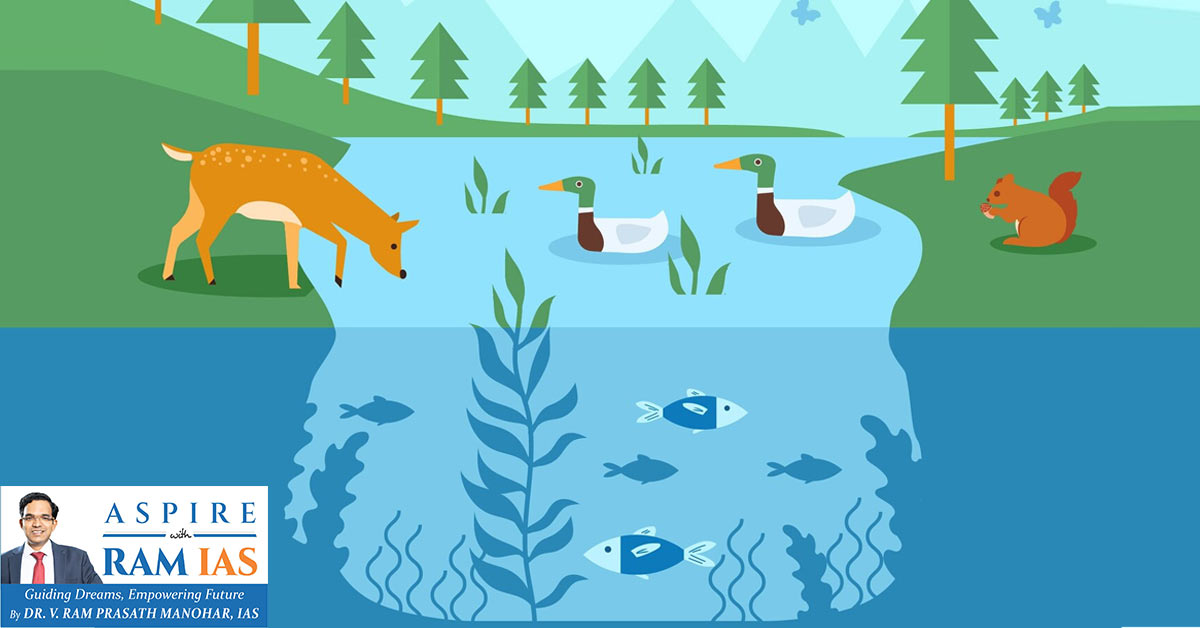
1. Ecosystem: Concept & Definition
- An ecosystem is the basic structural and functional unit of ecology.
- Odum (1963):
“An ecosystem is a functional unit of nature that includes living organisms interacting with the physical environment, resulting in the flow of energy and cycling of materials.” - Includes:
- Biotic components (living)
- Abiotic components (non-living)
- Interaction between these components creates a characteristic physical structure and species composition.
2. Structure of an Ecosystem
A. Abiotic (Non-living) Components
These regulate the distribution, abundance, and functioning of organisms.
- Climate: Temperature, rainfall, humidity
- Soil: Texture, nutrients, pH, moisture
- Water: Availability and quality
- Light: Controls photosynthesis
- Topography: Altitude, slope, drainage
- Air: Oxygen, CO₂ concentration
- Natural disturbances: Fire, floods, storms
Warm and moist climates → high productivity and faster decomposition
B. Biotic (Living) Components
1. Producers (Autotrophs)
They synthesize organic matter from inorganic substances.
(a) Photoautotrophs
- Use sunlight for photosynthesis
- Contain chlorophyll
- Examples:
- Green plants
- Algae
- Cyanobacteria
(b) Chemoautotrophs
- Use chemical energy (not sunlight)
- Found in extreme environments
- Examples:
- Nitrifying bacteria
- Sulphur bacteria
- Archaea in hydrothermal vents
2. Consumers (Heterotrophs)
- Cannot synthesize food
- Depend on producers or other consumers
Types:
- Primary consumers: Herbivores (deer, cattle)
- Secondary consumers: Carnivores (frog, lizard)
- Tertiary consumers: Top carnivores (tiger, eagle)
Macroconsumers
- Large consumers at higher trophic levels
- Example: Lion, Shark
3. Decomposers / Microconsumers
- Mainly bacteria and fungi
- Feed on dead organic matter (detritus)
- Convert organic matter into inorganic nutrients
- Also called saprotrophs
3. Interaction of Biotic & Abiotic Components
- Leads to:
- Species composition
- Vertical stratification
Stratification (Vertical Distribution)
- Example (Forest):
- Top layer: Trees
- Middle layer: Shrubs
- Bottom layer: Herbs & grasses
4. Functional Aspects of Ecosystem
(i) Productivity
Primary Productivity
- Rate of biomass production by plants
- Expressed as weight or energy per unit area per time
Types:
- Gross Primary Productivity (GPP):
Total photosynthetic production - Net Primary Productivity (NPP):
Biomass available to consumers
Formula (Very Important for Prelims):
NPP = GPP − Respiration (R)
- Secondary Productivity:
Rate of biomass formation by consumers
Highest NPP: Tropical rainforests, estuaries
Lowest NPP: Deserts, tundra
(ii) Decomposition
- Breakdown of dead organic matter into inorganic substances
- Raw material: Detritus (dead leaves, bark, animal remains, faecal matter)
Steps of Decomposition (Mnemonic: FLC-HM)
- Fragmentation – Detritivores (earthworms) break detritus
- Leaching – Soluble nutrients seep into the soil
- Catabolism – Microbial enzymes degrade detritus
- Humification – Formation of humus (dark, resistant, colloidal)
- Mineralisation – Release of inorganic nutrients
Faster decomposition:
- Warm, moist, aerobic conditions
- Detritus rich in nitrogen & sugars
Slower decomposition:
- Cold, dry, anaerobic conditions
- Detritus rich in lignin & chitin
(iii) Energy Flow
- Energy flows unidirectionally
- From:
- Sun → Producers → Consumers → Decomposers
- 10% law: Only ~10% energy is transferred to the next trophic level
Energy is never recycled; nutrients are recycled
(iv) Nutrient Cycling
- Cyclic movement of nutrients like:
- Carbon
- Nitrogen
- Phosphorus
- Maintains ecosystem stability
5. Types of Ecosystems
A. Terrestrial Ecosystems
1. Forest Ecosystem
- High biodiversity
- Types:
- Tropical rainforests
- Temperate forests
- Boreal (Taiga)
2. Grassland Ecosystem
- Moderate rainfall
- Dominated by grasses
- Types:
- Savannah
- Prairie
- Steppe
3. Desert Ecosystem
- Low rainfall
- Sparse vegetation
- Types:
- Hot desert (Sahara)
- Cold desert (Gobi)
4. Tundra Ecosystem
- Arctic & alpine regions
- Permafrost
- Mosses, lichens, dwarf shrubs
B. Aquatic Ecosystems
1. Freshwater
- Rivers, lakes, ponds, wetlands
2. Marine
- Oceans, seas, coral reefs
- Highest biodiversity
3. Estuarine
- Freshwater meets seawater
- Highly productive
- Brackish water species
C. Artificial Ecosystems
- Urban ecosystems: Cities, towns
- Agricultural ecosystems: Croplands, livestock farms
D. Specialised Ecosystems
- Wetland ecosystems: Marshes, swamps, bogs
- Mountain ecosystems: Altitudinal zonation, endemic species
MCQs
1. With reference to an ecosystem, consider the following statements:
I. Gross Primary Productivity includes the total rate of photosynthesis.
II. Net Primary Productivity represents biomass available to heterotrophs.
III. Net Primary Productivity is always greater than Gross Primary Productivity.
Which of the statements given above are correct?
A. I and II only
B. II and III only
C. I and III only
D. I, II, and III
Answer: A
2. In an ecosystem, which of the following are classified as abiotic components?
I. Temperature
II. Soil texture
III. Decomposers
IV. Light intensity
Select the correct answer using the code given below:
A. I and II only
B. I, II, and IV only
C. II, III, and IV only
D. I, II, III, and IV
Answer: B
3. With reference to producers in an ecosystem, consider the following statements:
I. Photoautotrophs use sunlight to synthesize organic matter.
II. Chemoautotrophs derive energy from inorganic chemical reactions.
III. Chemoautotrophs require chlorophyll for energy production.
Which of the statements given above are correct?
A. I and II only
B. II and III only
C. I and III only
D. I, II, and III
Answer: A
4. Consider the following processes involved in decomposition:
I. Fragmentation
II. Leaching
III. Humification
IV. Mineralisation
Which of the above are correct steps in the process of decomposition?
A. I and II only
B. I, II, and III only
C. I, II, III, and IV
D. II and IV only
Answer: C
5. In terrestrial ecosystems, a major fraction of energy flow occurs through:
A. Grazing food chain
B. Parasitic food chain
C. Detritus food chain
D. Microbial loop
Answer: C
6. Which of the following ecosystems generally show the highest net primary productivity?
A. Deserts
B. Tundra
C. Tropical rainforests
D. Temperate grasslands
Answer: C
