
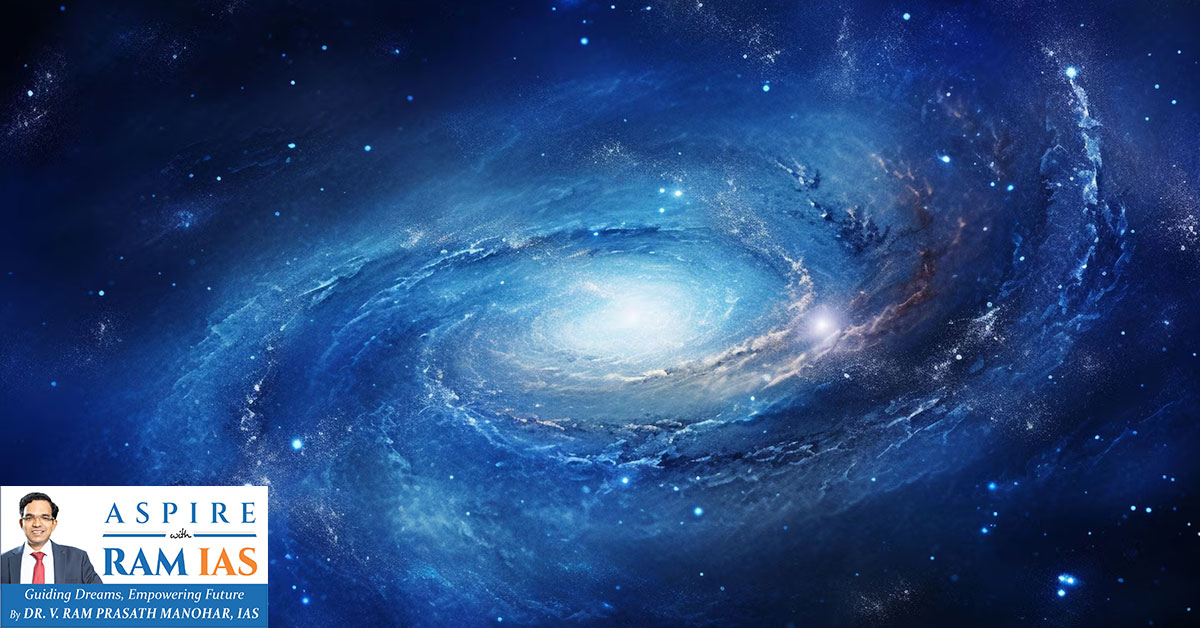
Galaxy
- A galaxy is a massive system of millions to billions of stars, along with gas and dust, held together by gravity.
- Galaxies are the basic building blocks of the universe.
- Smallest galaxies have ~1 lakh stars, while the largest have up to 3000 billion stars.
Types of Galaxies
Broadly classified into:
- Regular Galaxies
- Irregular Galaxies
- About 1/10th of all galaxies
- Contain very old stars
Regular Galaxies
Spiral Galaxies
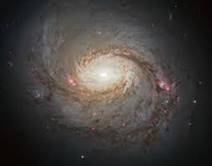
- Disc-shaped with a central bulge and spiral arms
- Non-uniform distribution of stars
- Old stars concentrated at the centre
- Young, bright stars are found in spiral arms
- Rich in interstellar gas and dust
- Active star formation occurs
- The Milky Way is a spiral galaxy
Elliptical Galaxies
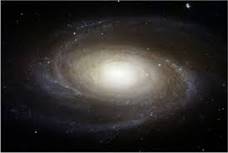
- Smaller and less bright than spiral galaxies
- Contain mostly old stars
- Very little gas and dust
- No new star formation
- Among the brightest galaxies in the universe
Dark Matter
- Outer arms of spiral galaxies (including the Milky Way) rotate faster than expected
- This indicates the presence of extra unseen mass → Dark Matter
- Accounts for ~85% of the total matter in the universe
- Does not interact with light
- Detected only through its gravitational effects
- Dark matter and dark energy ≈ 95% of the universe
Why “Dark” Matter?
- Does not emit, absorb, or reflect electromagnetic radiation
- Invisible across the electromagnetic spectrum
- Interacts only through gravity
Our Galaxy – The Milky Way
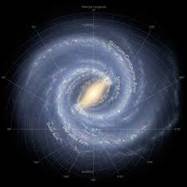
- Hosts our Solar System
- A disc-shaped spiral galaxy with a central bulge
- Diameter: 1,50,000–2,00,000 light-years
- Thickness:
- Nucleus: ~10,000 light-years
- Disc: 500–2,000 light-years
Key Features of the Milky Way
- Contains 100–400 billion stars
- Supermassive black hole – Sagittarius A* at the centre
- The Solar System lies in the Orion Arm
- Distance of Solar System from centre: ~26,000 light-years
- Red dwarfs are the most common stars
- Sun-like stars are rare
Motion of the Sun
- Completes one revolution around the Milky Way in ~220 million years
- Orbital speed: ~285 km/s
Neighbouring Galaxy
- Andromeda Galaxy
- Closest large galaxy to the Milky Way
- Distance: ~2 million light-years
