
Study Materials
General Studies - Environment
Global Environmental Issues
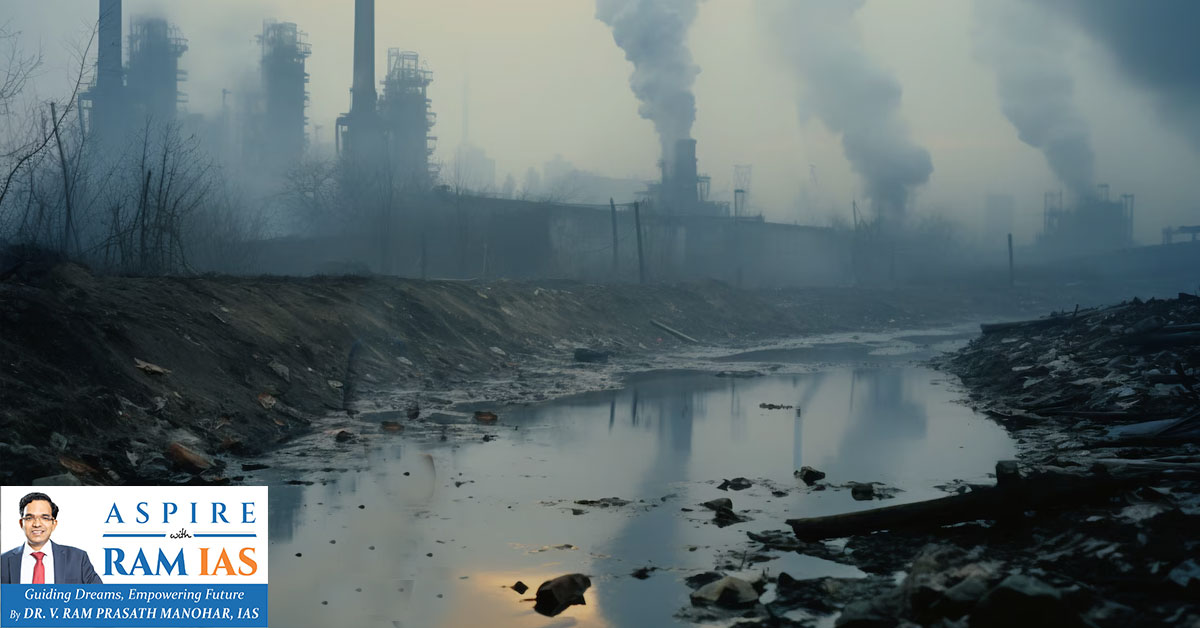
What are Global Environmental Issues?
Global environmental issues are large-scale environmental problems that affect multiple countries or the entire planet, threatening ecosystems, human health, and long-term sustainability.
Major Global Environmental Issues:
- Pollution (air, water, soil)
- Biodiversity loss
- Desertification
- Depletion of the ozone layer
- Acid rain
- Oil spills
- Dumping of hazardous wastes
- Climate change due to the greenhouse effect and global warming
Environmental Degradation
Environmental degradation refers to the process by which the natural environment becomes less capable of supporting life. It makes air, water, soil, and ecosystems unfit or less suitable for survival, causing ecological imbalance.
Why is Environmental Degradation Increasing?
- Population explosion → increased demand for resources
- Urbanisation → expansion of cities and infrastructure
- Rapid industrialisation → higher production and consumption
- These together lead to the overexploitation of natural resources
Major Causes of Environmental Degradation
A. Air Pollution
Air pollution occurs due to the presence of harmful substances in the atmosphere.
Major air pollutants:
- Gaseous pollutants: Oxides of carbon, nitrogen, and sulphur
- Particulate matter: Fine metal dust, fly ash, soot, cotton dust, radioactive substances
- Burning of plastics: Releases polychlorinated biphenyls (PCBs)
- Industrial catastrophes:
- Accidental release of toxic gases like:
- Phosgene (COCl₂)
- Methyl isocyanate (Bhopal Gas Tragedy, 1985)
- Secondary pollutants:
- Formed by reactions among primary pollutants
- Examples: Smog, Acid Rain
- Global warming:
- Excessive fossil fuel use increases CO₂ and other greenhouse gases
- Accidental release of toxic gases like:
B. Water Pollution
- Industrial & domestic effluents introduce:
- Pathogens
- Heavy metals
- Hazardous/toxic chemicals in water:
- Cause cancer
- Genetic mutations
- Damage to the nervous, immune, and hormonal systems
C. Soil Degradation
Caused by:
- Deforestation
- Overgrazing
- Intensive cultivation
- Over-irrigation
Results in:
- Loss of topsoil
- Decline in soil fertility
- Long-term degradation leads to desertification
D. Damage to Ecology & Biodiversity
- Habitat destruction & fragmentation due to industries and infrastructure
- Invasive (alien) species reduce native species populations
- Overexploitation of natural resources
- Introduction of new or genetically modified species affects ecosystem productivity
Consequences of Environmental Degradation
1. Increased Sensitivity to Diseases
- Crops, fish, and domesticated animals become more vulnerable to pests and diseases
2. Genetic Resistance
- Excessive use of pesticides, insecticides, and antibiotics
- Leads to resistant pathogens due to accelerated natural selection
3. Disruption of Nutrient Recycling
- Fertiliser use interferes with natural biogeochemical cycles
4. Loss of Biodiversity
- Habitat destruction and fragmentation threaten endangered species
5. Climate Change & Global Warming
- Results in:
- Global warming
- Acid rain
- Ocean acidification
6. Melting of Ice Caps & Sea Level Rise
- Faster melting of the Himalayan and polar ice
- Future threat to coastal landforms
7. Change in Weather Patterns
- Increase in extreme weather events
- Unpredictable climate conditions
8. Depletion of Water Resources
- Water pollution reduces the availability of safe and usable water
9. Desertification
- Fertile land converts into wasteland due to:
- Soil erosion
- Salinity
- Loss of fertility
