
Study Materials
General Studies - Environment
Plastic Pollution
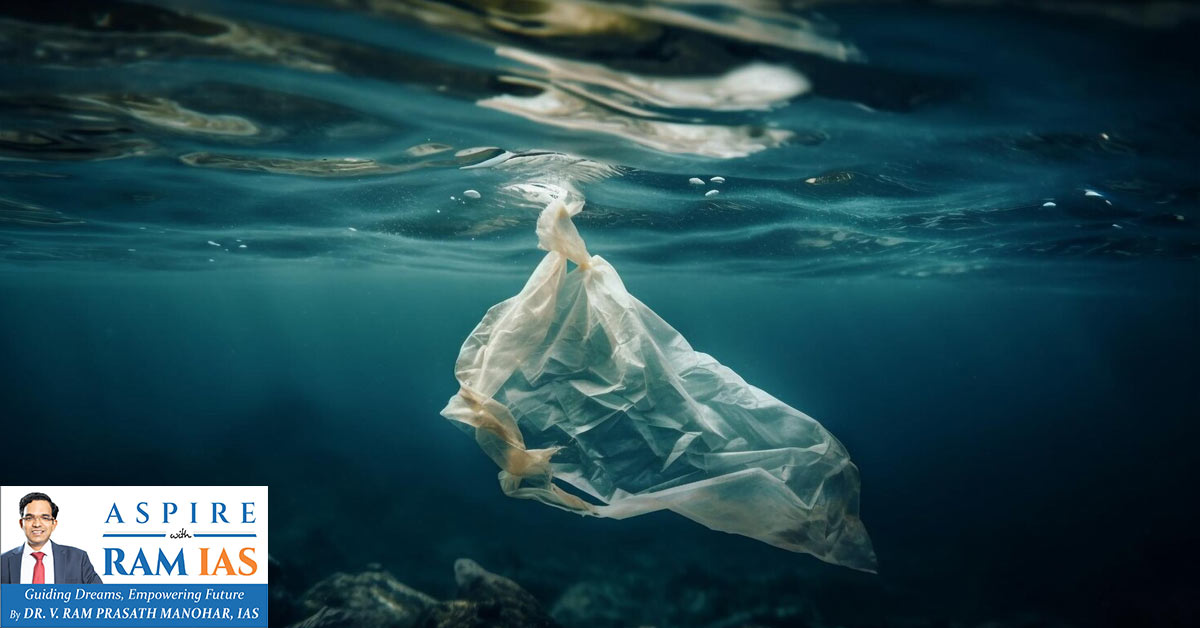
What is Plastic Pollution?
Plastic Pollution refers to the accumulation of plastic products in the environment to such an extent that they harm wildlife, ecosystems, and human health.
Key Features
- Plastics are non-biodegradable or degrade very slowly
- They persist in the environment for hundreds of years
- It is a major type of environmental pollution
Sources of Plastic Pollution
1. Marine Sources
Direct Sources
- Dumping of plastic debris into oceans
Indirect Sources
- Plastic waste from land enters oceans through:
- Rivers
- Stormwater runoff
- Drainage systems
2. Terrestrial Sources
Major land-based sources include:
- Plastic shopping bags
- Plastic toys
- PET bottles
- Disposable plastic items
- Poor plastic waste disposal
- Low recycling rates
Impacts of Plastic Pollution
1. Impact on Marine Ecosystem
Long-term Persistence
- Plastics deposited in marine sediments remain for centuries
Ecosystem Disruption
- Plastic accumulation affects benthic ecosystems
- Limits gas exchange between water and sediments
Harm to Marine Animals
- Ingestion of plastic by fish, seabirds, turtles
- Entanglement in fishing nets and plastic debris
Microplastic Entry into Food Chain
- Microbeads and fragments enter marine food chains
Spread of Invasive Species
- Floating plastics transport alien species across oceans
2. Impact on Terrestrial Ecosystem
Human Health Risks
- Plastics contain carcinogenic petrochemicals
- Microplastics found in:
- food
- water
- air
Threat to Animals
- Stray animals ingest plastic waste, causing:
- choking
- digestive blockage
Air Pollution
- Burning plastic releases toxic gases
Urban Flooding
- Plastic blocks drainage systems
Land Degradation
- Reduces soil quality
- Affects agriculture
Groundwater Pollution
- Chemicals from plastics contaminate groundwater
Effects of Plastic Pollution
Marine Life Impact
- Millions of marine animals die annually due to:
- ingestion
- entanglement
Ecosystem Damage
- Plastics disrupt the ecological balance
- Release toxic chemicals into soil and water
Human Health Risks
Microplastics may cause:
- Hormonal imbalance
- Respiratory problems
- Toxic chemical exposure
Economic Costs
Plastic pollution affects:
- Tourism industry
- Fisheries
- Coastal economies
Plastic Waste
Plastic waste forms a major component of Municipal Solid Waste (MSW).
Reasons for High Usage
- Low cost
- Convenience
- Durability
Environmental Hazards
- Non-biodegradable
- Drain blockage
- Toxic emissions from burning
- Harm to animals
Types of Plastics
1. Thermoplastics
Plastics that soften on heating and harden on cooling.
Features
- Easily recyclable
- Most common type
Examples
- Polyethylene (HDPE, LDPE)
- Polyvinyl Chloride (PVC)
- Polyamide
Share in India
≈ 80% of plastic waste
2. Thermosetting Plastics
Characteristics
- Irreversibly hardened during manufacturing
- Cannot be remoulded
- Difficult to recycle
Examples
- Synthetic resins
- Unsaturated polyesters
Share in India
≈ 20% of plastic waste
Types of Plastic Waste
1. Single-Use Plastics
Short-term plastics are discarded after one use.
Examples:
- Plastic bags
- Straws
- Packaging materials
2. Microplastics
Plastic particles are less than 5 mm in size.
Sources
- Breakdown of larger plastics
- Cosmetics
- Synthetic clothing
3. Hard Plastics
Examples:
- Bottles
- Containers
- Household plastic items
4. Thermoset Plastics
Used in:
- Electronics
- Automobile components
Not easily recyclable.
5. Biodegradable Plastics
Designed to break down faster but require specific environmental conditions.
Measures Taken to Curb Plastic Pollution
Plastic Waste Management Rules 2016
Key objectives:
- Reduce plastic waste generation
- Improve collection and recycling
Plastic Waste Management (Amendment) Rules 2022
1. Extended Producer Responsibility (EPR)
Producers are responsible for the end-of-life management of plastic packaging.
2. Ban on Certain Single-Use Plastics
Effective 1 July 2022
Plastic Packaging Categories
Category I
Rigid plastic packaging
Category II
Flexible plastic packaging
Category III
Multi-layered plastic packaging
Category IV
Compostable plastic carry bags and sheets
Centralised Online Portal
Managed by the Central Pollution Control Board (CPCB)
Purpose:
- Registration of producers
- Filing annual returns
- Monitoring EPR compliance
Environmental Compensation
Based on the Polluter Pays Principle for failure to meet EPR targets.
Funds used for:
- Plastic waste collection
- Recycling
- Safe disposal
Extended Producer Responsibility (EPR)
Definition
EPR is a policy approach where producers are responsible for the environmental impact of their products throughout the life cycle.
Objectives
- Encourage eco-friendly design
- Improve recycling
- Reduce plastic waste
Applied to
- Plastic waste
- E-waste
- Battery waste
India first introduced EPR in the E-Waste Rules 2011.
Government Initiatives
MARPOL Convention
India is a signatory to the International Convention for Prevention of Marine Pollution.
India Plastic Challenge – Hackathon
Encourages innovation for:
- Plastic alternatives
- Waste management technologies
‘Prakriti’ Mascot
Launched by the Ministry of Environment to promote sustainable lifestyle practices.
Other Initiatives
- Swachh Bharat Mission
- India Plastics Pact
- Project REPLAN
- Un-Plastic Collective
- GoLitter Partnerships
- National Dashboard on Single-Use Plastics
- EPR Portal for plastic packaging
- Graphene production from waste plastic
Control Measures for Plastic Pollution
1. Promote Alternatives
- Jute bags
- Paper bags
- Cloth bags
2. Reusable Products
- Reusable water bottles
- Reusable containers
3. Proper Waste Disposal
- Segregation
- Scientific landfill management
4. Recycling
- Strengthen recycling infrastructure
5. Government Regulations
- Ban low-thickness plastic bags
- Enforce waste management laws
6. Public Awareness
- Community education programs
- Behavioural change campaigns
