
Study Materials
General Studies - Environment
Air Pollution
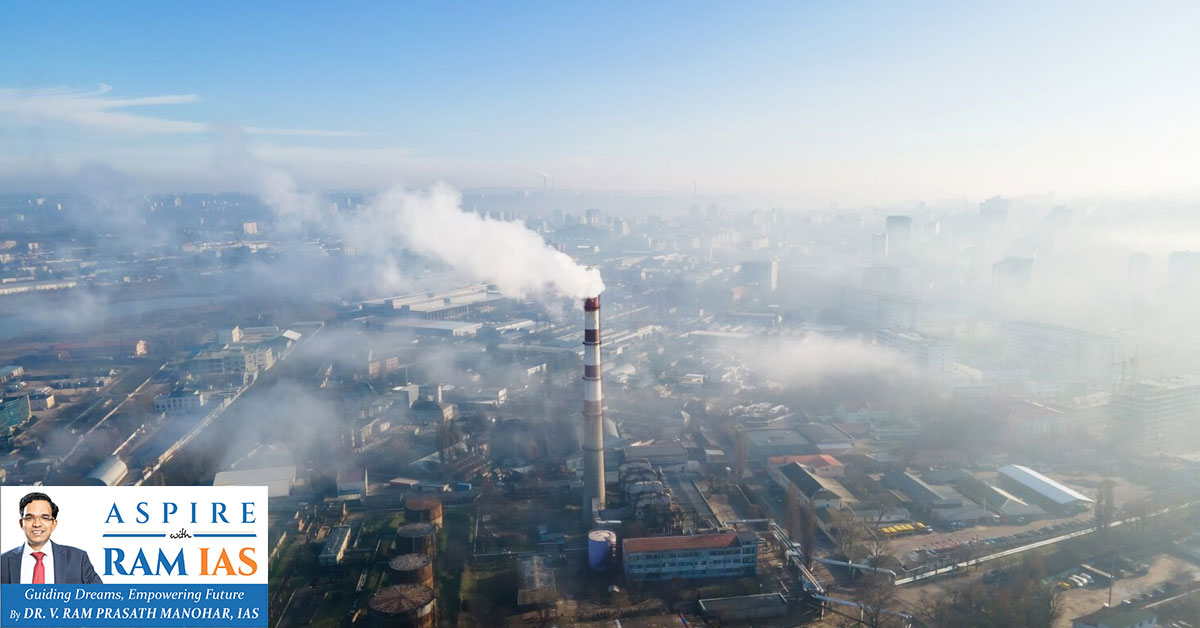
1. Pollution:
- Pollution: Addition of undesirable substances into the environment due to human activities.
- Pollutants: Physical, chemical or biological agents causing harm to humans, organisms, property, or ecological processes.
- Major types:
- Air
- Water
- Soil
- Noise
- Thermal
- Radiation
- Legal Framework:
- Environment (Protection) Act, 1986
- Enacted after Bhopal Gas Disaster (1984)
2. Air Pollution: Definition
- Presence of solid, liquid or gaseous substances (including noise & radiation) in the atmosphere at concentrations harmful to:
- Human health
- Other organisms
- Property
- Environmental processes
3. Major Sources of Air Pollution
- Burning of fossil fuels (coal, petroleum)
- Thermal power plants
- Industries & mining
- Vehicular emissions
- Construction activities
- Stone quarries
Key Point: Fossil fuels contain nitrogen & sulphur → oxides formed on combustion.
4. Acid Rain & Marble Cancer
- Oxides of Nitrogen (NOx) & Sulphur (SO₂) react with water vapour →
- Nitric acid (HNO₃)
- Sulphuric acid (H₂SO₄)
- Precipitation of acids → Acid Rain
- Marble Cancer: Corrosion of marble monuments (e.g., Taj Mahal)
5. Smog
- Mixture of smoke + fog
- Caused by:
- Suspended particulates
- Hydrocarbons
- Condensed water vapour
- Reduces visibility, especially in winter
6. Classification of Pollutants
A. Based on Formation
Primary Pollutants
- Emitted directly
- Examples:
- CO, CO₂
- SO₂, NOx
- Plastics, DDT
Secondary Pollutants
- Formed by chemical reactions
- Example:
- PAN (Peroxyacetyl Nitrate)
B. Based on Occurrence
Quantitative Pollutants
- Naturally present but harmful beyond threshold
- Examples: CO₂, NOx
Qualitative Pollutants
- Not found naturally
- Human-made
- Examples: DDT, herbicides, fungicides
7. Particulate Pollutants (SPM)
- Suspended matter: dust, soot, fly ash
- Size range: 001 – 500 μm
Size | Behaviour |
>10 μm | Settle down |
<10 μm | Float freely |
<2.5 μm (PM2.5) | Most harmful |
<0.02 μm | Persistent aerosols |
- 5 (CPCB): Causes maximum health damage
- Diseases:
- Asthma
- Bronchitis
- Pneumoconiosis
8. Fly Ash
Source
- Coal-based thermal power plants
Composition
- Silica (SiO₂)
- Alumina
- Calcium oxide (CaO)
- Heavy metals: Lead, Arsenic, Cobalt
Impacts
- Air & water pollution
- Crop damage (leaf deposition)
- Heavy metal contamination
Uses
- Fly ash bricks
- Cement replacement (up to 35%)
- Road embankments
- Mine filling
- Soil fertility improvement
Policy
- Mandatory use within:
- 100 km of Thermal Power Plant (construction)
- 50 km for mine filling
9. Heavy Metal Pollutants
Lead
- Sources:
- Petrol (TEL)
- Batteries
- Paints
- Effects:
- Nervous system damage
- Kidney & liver damage
- Reduced IQ in children
- Cumulative poisoning
10. Nanoparticles (NPs)
- Size: ~1 nanometre
- Sources:
- Natural: volcanoes, forest fires, dust storms
- Man-made: industrial & mechanical processes
Environmental Impacts
- Accumulate in air, water, soil
- Enter food chains
- Produce Reactive Oxygen Species (ROS)
Special Effects
- Asian Brown Clouds → Glacier melting
- Ozone depletion (Cl⁻ radicals)
- Stratospheric cooling (via water vapour & PSCs)
11. Major Gaseous Air Pollutants
Carbon Monoxide (CO)
- Colourless, odourless, toxic
- Source: incomplete combustion
- Forms carboxyhaemoglobin
- Not a GHG but promotes:
- Ozone formation
- Methane increase
Carbon Dioxide (CO₂)
- Greenhouse gas
- Causes:
- Global warming
- Ocean acidification
- 7% concentration → fatal asphyxiant
Chlorofluorocarbons (CFCs)
- Used in ACs, refrigerators, aerosols
- Cause ozone depletion
- Controlled under Montreal Protocol
Ozone (O₃)
- Stratosphere: Protective
- Troposphere: Toxic pollutant
- Causes:
- Eye irritation
- Respiratory issues
Nitrogen Oxides (NOx)
- Produced at high temperatures
- Sources:
- Engines
- Power plants
- Lightning
- Effects:
- Acid rain
- Smog
- Tropospheric ozone
Sulphur Dioxide (SO₂)
- Pungent smell
- Causes acid rain
- Sources:
- Coal burning
- Volcanic eruptions
- Ore roasting
Volatile Organic Compounds (VOCs)
- Easily evaporate
- Sources:
- Paints
- Perfumes
- Furniture polish
- Effects:
- Headache
- Nausea
- Liver damage
12. Other Pollutants
Benzene
- Component of petrol
- Causes cancer & bone marrow failure
Ethylene
- Used for fruit ripening
- Low toxicity
- Ethylene oxide is carcinogenic
Biological Pollutants
- Pollen, fungi, mites
- Cause asthma & allergies
Asbestos
- Causes:
- Lung cancer
- Mesothelioma
- Asbestosis
Radon
- Soil-emitted radioactive gas
- Causes lung cancer in poorly ventilated houses
