
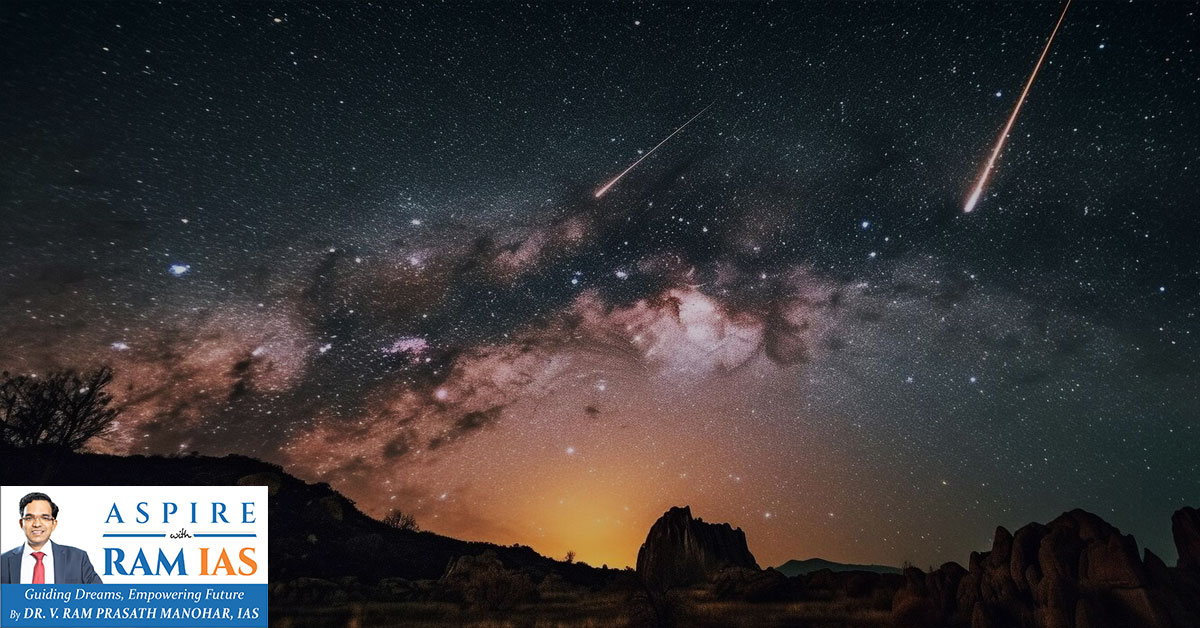
1. Asteroids
- Asteroids are remnants of planetary formation that failed to form a planet due to Jupiter’s strong gravitational pull
- Also called planetoids
- Composition:
- Rocky and metallic minerals
- Some ice
- Size:
- From microscopic particles to hundreds of kilometres
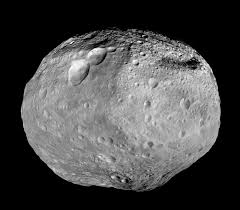
- From microscopic particles to hundreds of kilometres
2. Asteroid Belt
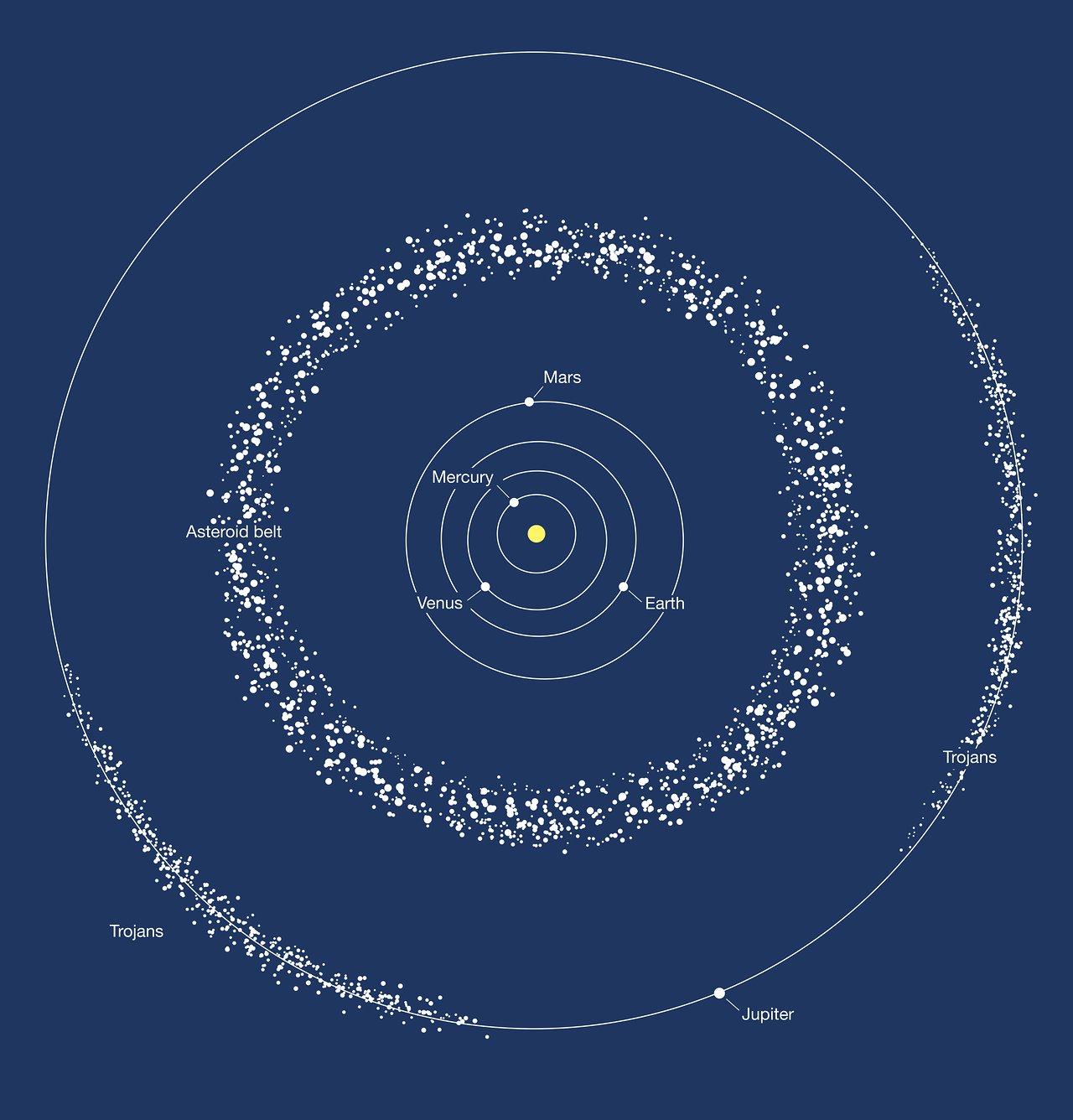
- A circular zone of asteroids orbiting the Sun
- Located between Mars and Jupiter
- Distance from Sun: 3 AU to 3.3 AU
- Reason for formation:
- Jupiter’s gravity prevented planet formation
- Mostly contains rocky bodies
- The asteroid belt is NOT between Jupiter and Saturn
3. Ceres
- Largest asteroid
- Distance from Sun: 77 AU
- Diameter: 946 km
- Classified as:
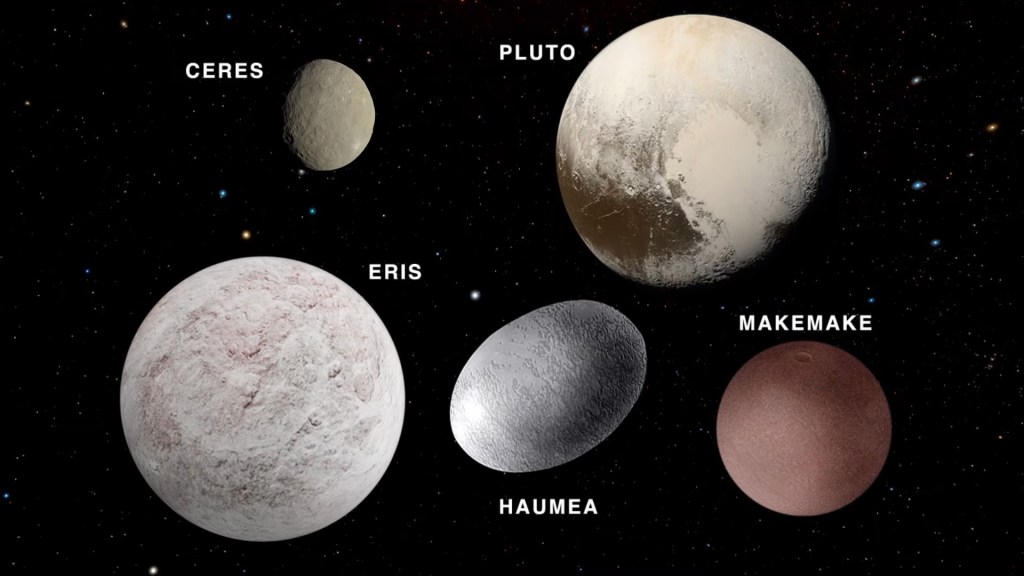
- Dwarf planet
- Protoplanet
- Only an asteroid large enough to become nearly spherical
- All other asteroids → Small Solar System Bodies
- Ceres is to the asteroid belt what Pluto is to the Kuiper Belt
4. Kuiper Belt
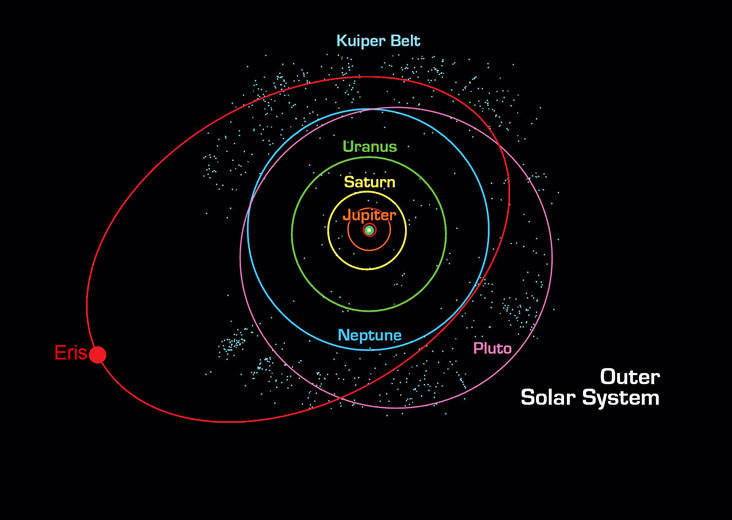
- A ring of icy objects beyond Neptune
- Extends from 30 AU to 50 AU
- Composition:
- Mostly ice + rocky material
- Similar to the asteroid belt, but:
- Farther
- Icy instead of rocky
5. Pluto and Charon
- Pluto:
- Distance: 39 AU
- Largest known Kuiper Belt Object
- Diameter: 2,377 km
- Declared Dwarf Planet (2006)
- Charon:
- The largest moon of Pluto
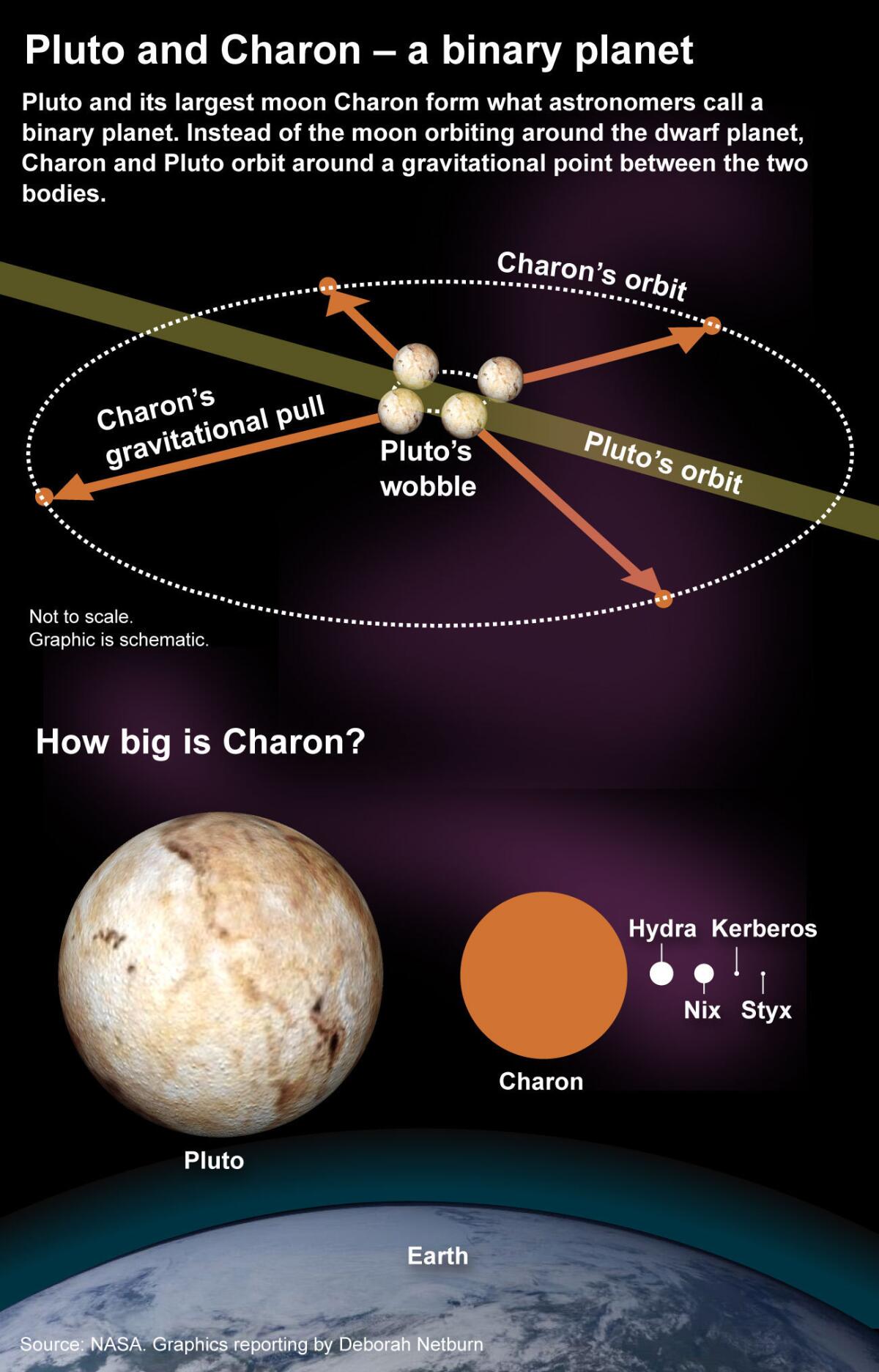
- The largest moon of Pluto
IAU Definition of a Planet
A planet must:
- Orbit the Sun
- Be nearly spherical
- Not be a satellite
- Clear its orbital neighbourhood
Pluto fails the last condition
Dwarf Planet
- Meets all criteria except clearing debris
- Examples:
- Ceres
- Pluto
- Eris (2,326 km)
6. Comets
- Made of:
- Frozen gases (water, ammonia, methane, CO₂)
- Rocky and metallic material
- Orbits:
- Highly elliptical
- When near the Sun:
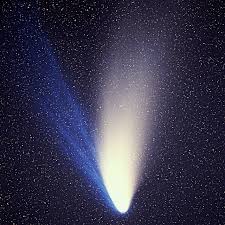
- Solar wind causes heating
- Forms coma and tail
Types of Comets
- Short-period comets
- Origin: Kuiper Belt
- Period: a few hundred years
- Long-period comets
- Origin: Oort Cloud
- Period: thousands of years
7. Oort Cloud
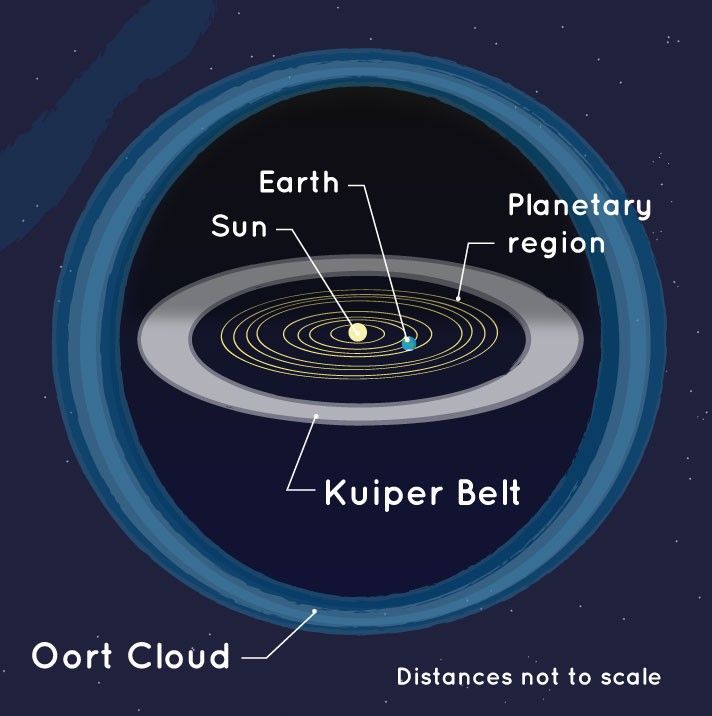
- A giant spherical shell of icy bodies
- Surrounds the solar system
- Distance:
- 5,000 AU to 100,000 AU
- Source of long-period comets
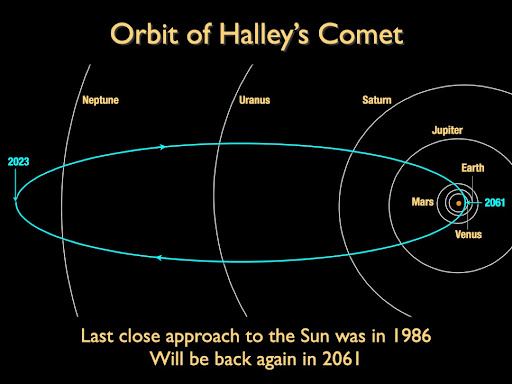
8. Halley’s Comet
- One of the largest known comets
- Orbital period: 76 years
- Last visited Earth: 1986
9. Meteoroid, Meteor & Meteorite
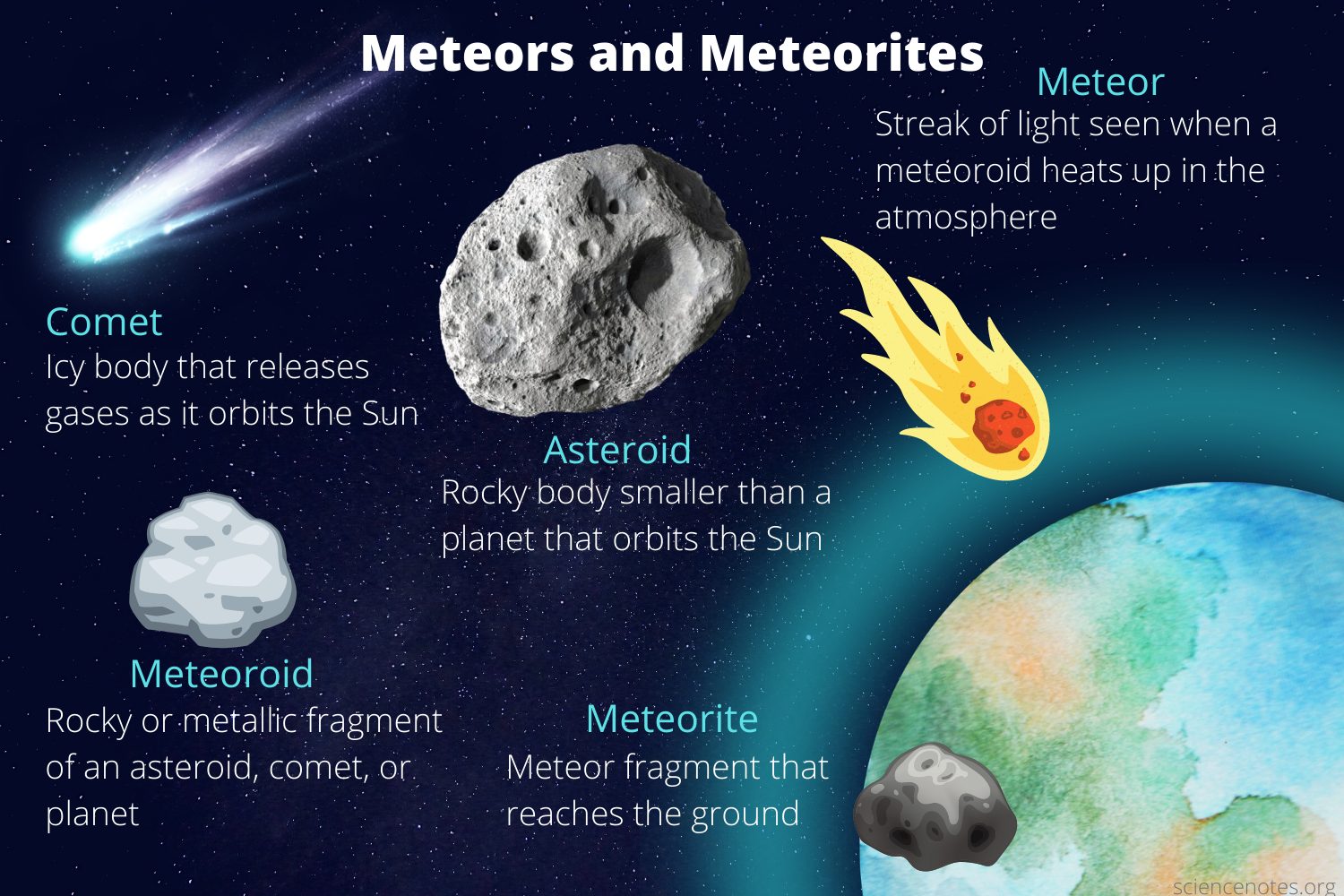
Meteoroid
- Small solid debris from:
- Asteroids
- Comets
- Moves in interplanetary space
Meteor
- When a meteoroid enters Earth’s atmosphere
- Burns due to friction in the mesosphere (~200 km)
- Appears as:
- Shooting star / falling star
Meteorite
- Part of a meteoroid that:
- Survives atmospheric burning
- Reaches Earth’s surface
10. Meteorite Craters
- Circular depressions formed by a meteorite impact
- Common on:
- Moon and Mercury
- Reason: negligible atmosphere + geological inactivity
Largest Meteor Crater (World)
- Arizona, USA
- Depth: 1,300 m
- Age: over 10,000 years
11. Chicxulub Crater
- Location: Yucatan Peninsula, Mexico
- Cause:
- Massive meteor impact
- Impact:
- Mass extinction of dinosaurs
- End of the Cretaceous period (65 million years ago)
12. Meteorite Craters in India
- Lonar Lake (Maharashtra)
- Diameter: 8 km
- Ramsar Site
- Dhala Crater (Madhya Pradesh)
- Diameter: 14 km
- Ramgarh Crater (Rajasthan)
- Diameter: 5 km
- Potential meteorite crater
