
Study Materials
General Studies - Modern History
Battle of Buxar (1764)
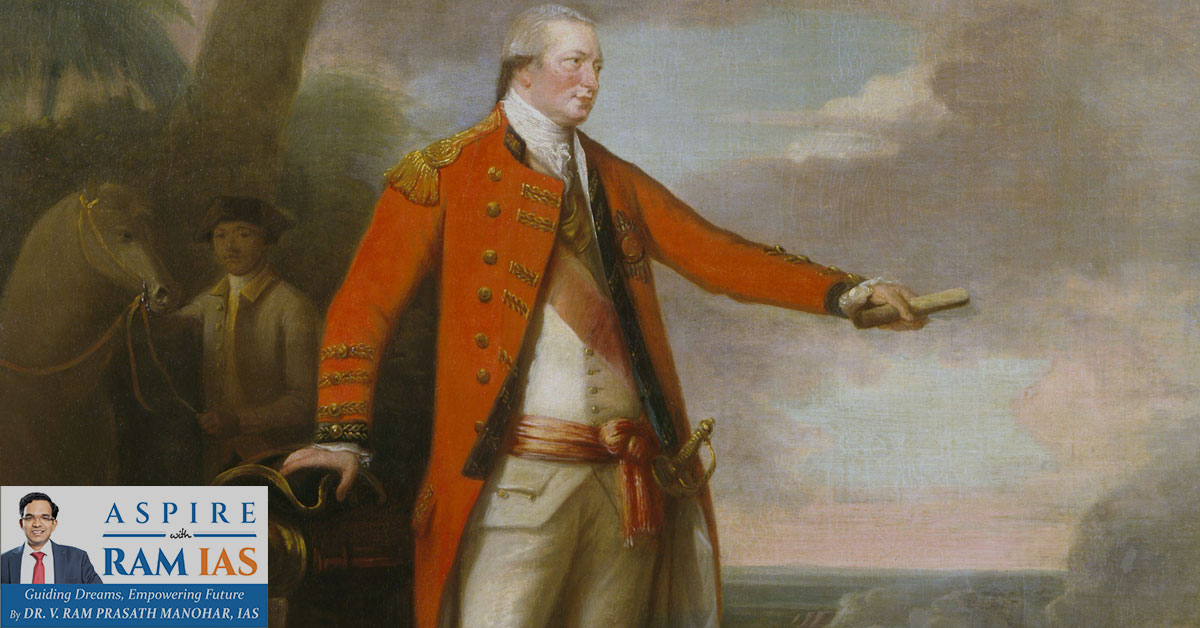
Basic Facts
- Year: 22 October 1764
- Place: Buxar (Bihar)
- British Commander: Major Hector Munro
- Opposing Alliance:
- Mir Kasim (ex-Nawab of Bengal)
- Shuja-ud-Daulah (Nawab of Awadh)
- Shah Alam II (Mughal Emperor)
Immediate & Structural Causes
- Misuse of Dastaks:
- EIC officials used duty-free passes for private trade → loss of Bengal revenue.
- Assertion by Mir Kasim:
- Abolished all internal transit duties to ensure equality → opposed by the Company.
- British interference in administration:
- Support to Ram Narayan (Deputy Governor of Bihar).
- Armed conflict (1763):
- Wars between Mir Kasim and the Company led to Buxar.
Course of the Battle
- The British defeated the combined Indian forces decisively.
- English victories at Katwah, Murshidabad, Giria, Sooty, Munger.
- The battle was short but decisive → ended organized resistance.
Significance / Impact
- First time the British defeated:
- A Nawab + Mughal Emperor together.
- English emerged as a major power in North India.
- The foundation of British political rule, not just commercial control.
- Plassey gave foothold, Buxar gave authority.
Treaty of Allahabad (1765)
Signed by Robert Clive
With Shah Alam II
- Granted Diwani rights of:
- Bengal, Bihar, Orissa to EIC.
- Annual tribute of ₹26 lakh to the Emperor.
- ₹53 lakh for Nizamat expenses.
With Shuja-ud-Daulah
- Paid ₹50 lakh war indemnity.
- Allahabad & Kara were given to Shah Alam II.
- Awadh was made a buffer state.
Administrative Consequences
- Dual Government of Bengal (1765–1772):
- Company: Diwani (revenue)
- Nawab: Nizamat (police & justice)
- Real power with the Company; Nawab became nominal.
Failure of Dual Government
- Breakdown of administration.
- Exploitation of peasants and artisans.
- Destruction of:
- Bengal silk industry
- Cotton textiles
- Severe revenue extraction → famine of 1767–69.
Abolition of Dual Government
- Abolished by Warren Hastings (1772).
- Company assumed:
- Revenue collection
- Civil justice
- Administrative control
- Nawab was reduced to a pensioner.
- The company became the de facto ruler of Bengal, Bihar, and Orissa.
MCQs
Q1. The Battle of Buxar (1764) was fought between the British East India Company and:
A. Siraj-ud-Daulah alone
B. Mir Kasim, Shuja-ud-Daulah, and Shah Alam II
C. Tipu Sultan and Marathas
D. Nizam of Hyderabad
Answer: B
Q2. The immediate outcome of the Battle of Buxar was:
A. Abolition of the Mughal Empire
B. Grant of Diwani rights to the East India Company
C. Establishment of Permanent Settlement
D. Introduction of Subsidiary Alliance
Answer: B
Q3. Who was the British commander in the Battle of Buxar (1764)?
A. Robert Clive
B. Warren Hastings
C. Major Hector Munro
D. Lord Cornwallis
Answer: C
