

Karst Landforms
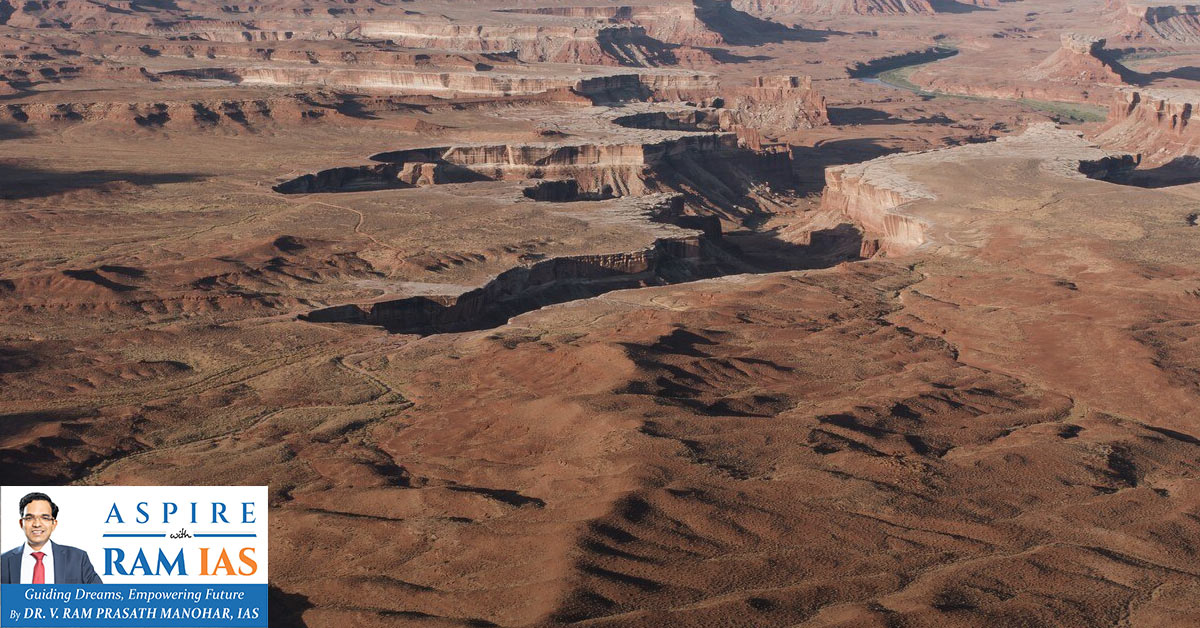
Karst topography is a landscape formed by the dissolution of soluble rocks such as Limestone, Dolomite, Gypsum
Arid Landforms
Arid landforms are distinct geological features created in dry, sparsely vegetated regions primarily by wind (aeolian)…

Glacial Landforms – Erosional & Depositional
A glacier is a moving mass of ice (a few meters per day) that acts as an agent of erosion, transportation, and deposition, and carries rock debris.
Fluvial Landforms
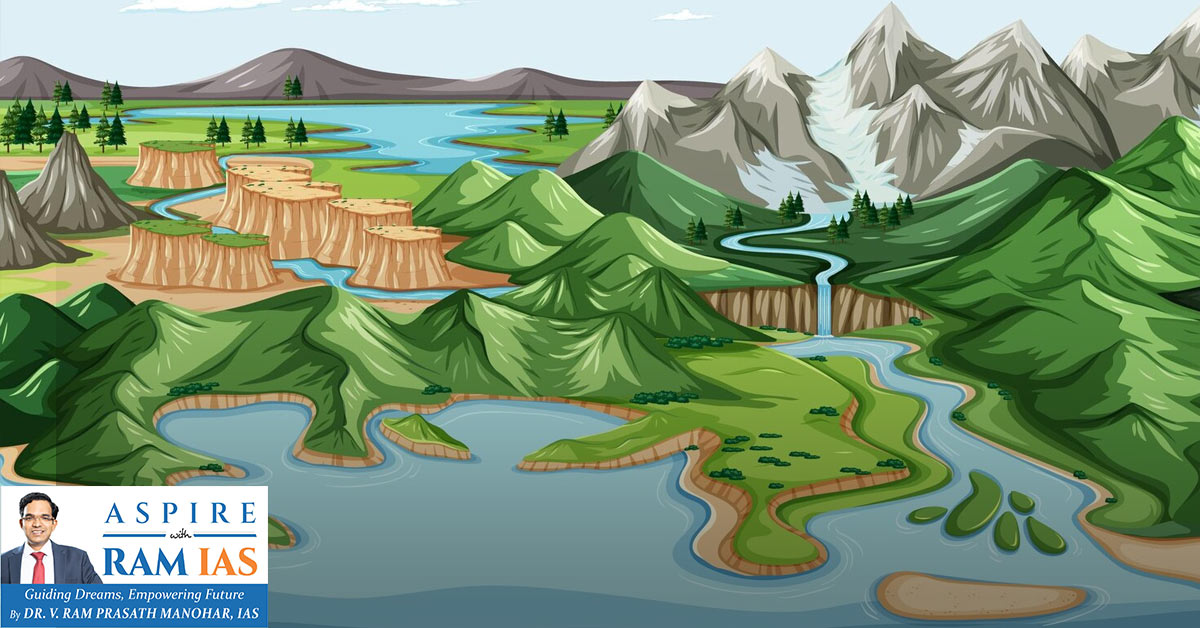
Fluvial landforms are created by running water (rivers). Rivers drain nearly 68% of Earth’s land surface….
Earth’s Layers: Internal Structure of the Earth
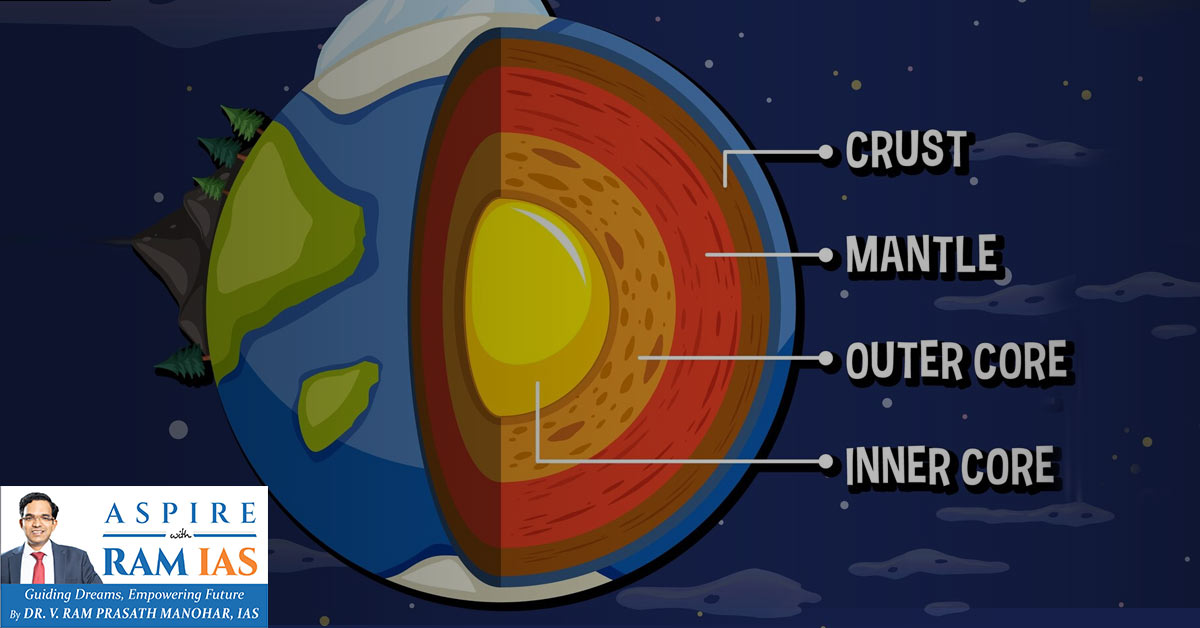
The Earth is composed of concentric layers with distinct physical and chemical properties.
Asteroids, Comets & Meteors
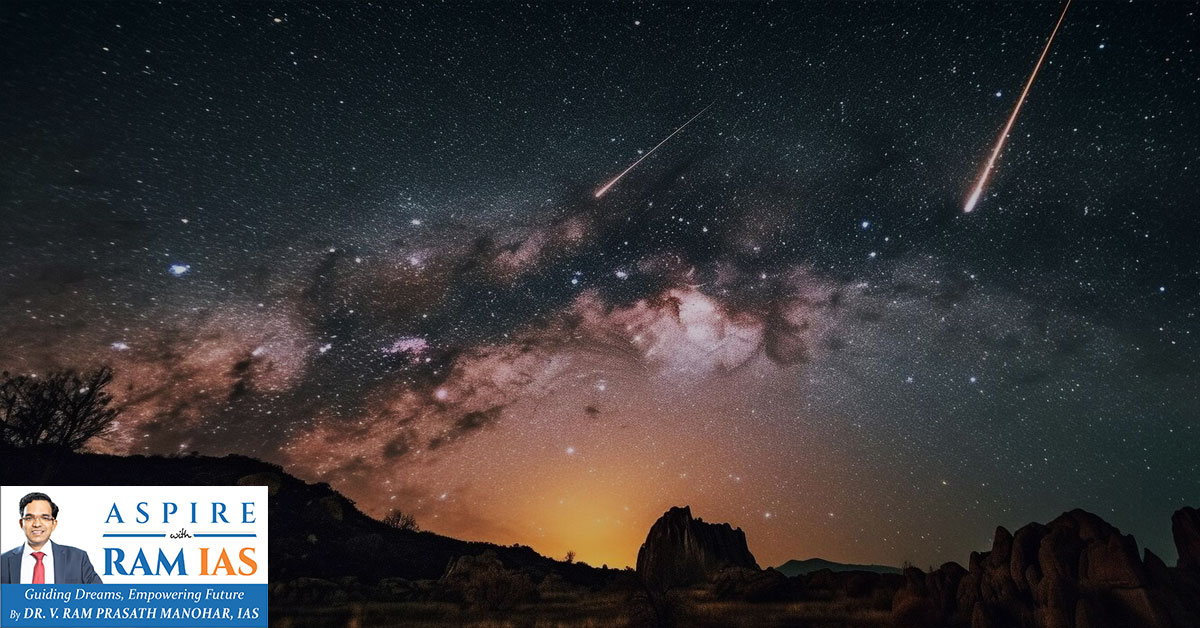
Asteroids are remnants of planetary formation that failed to form a planet due to Jupiter’s
strong gravitational pull
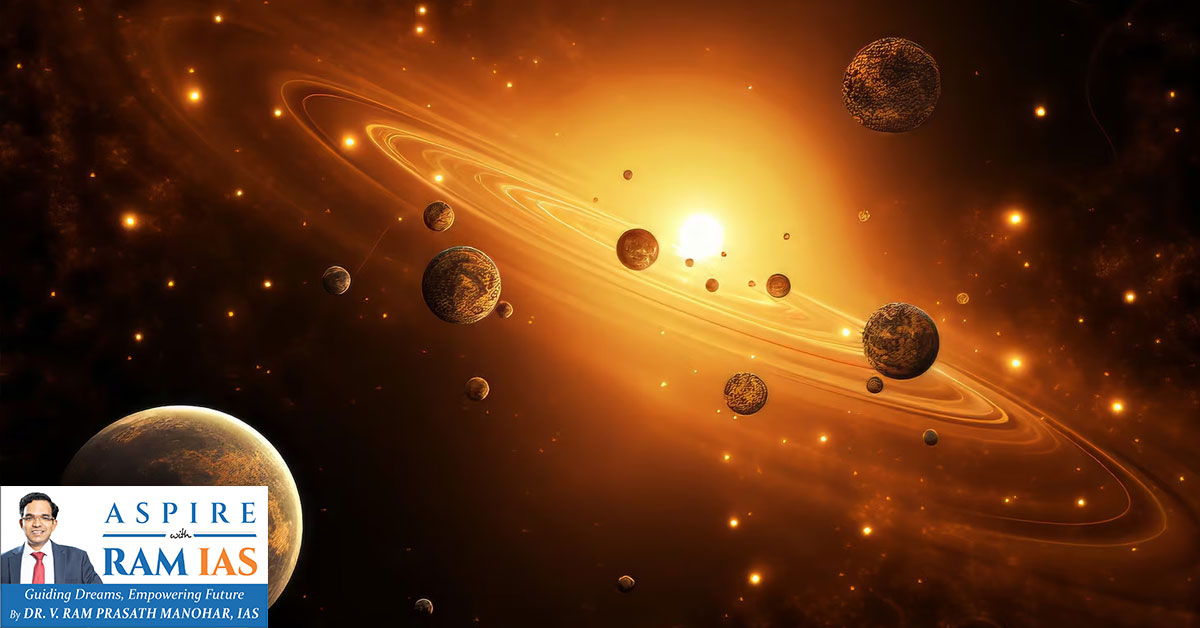
Planets of the Solar System
A planet is a celestial body that, revolves around a star (Sun), moves in an elliptical orbit, does not emit its own light
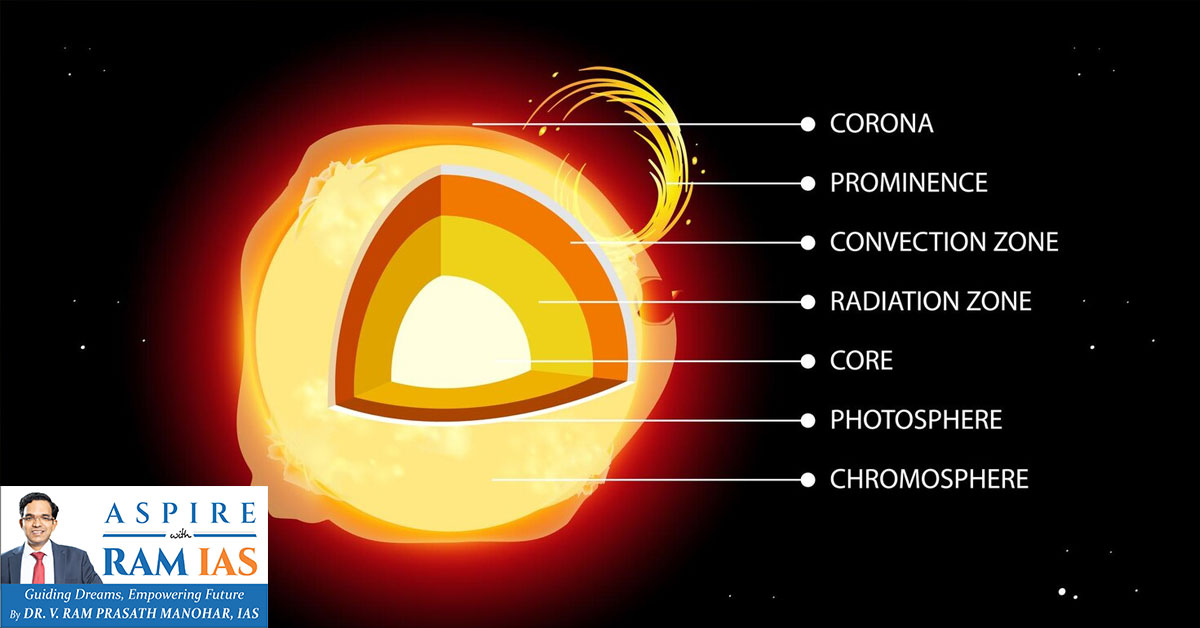
The Sun
Age: ~4.6 billion years, Diameter: ~1.39 million km, Surface Temperature: ~6000 °C , …
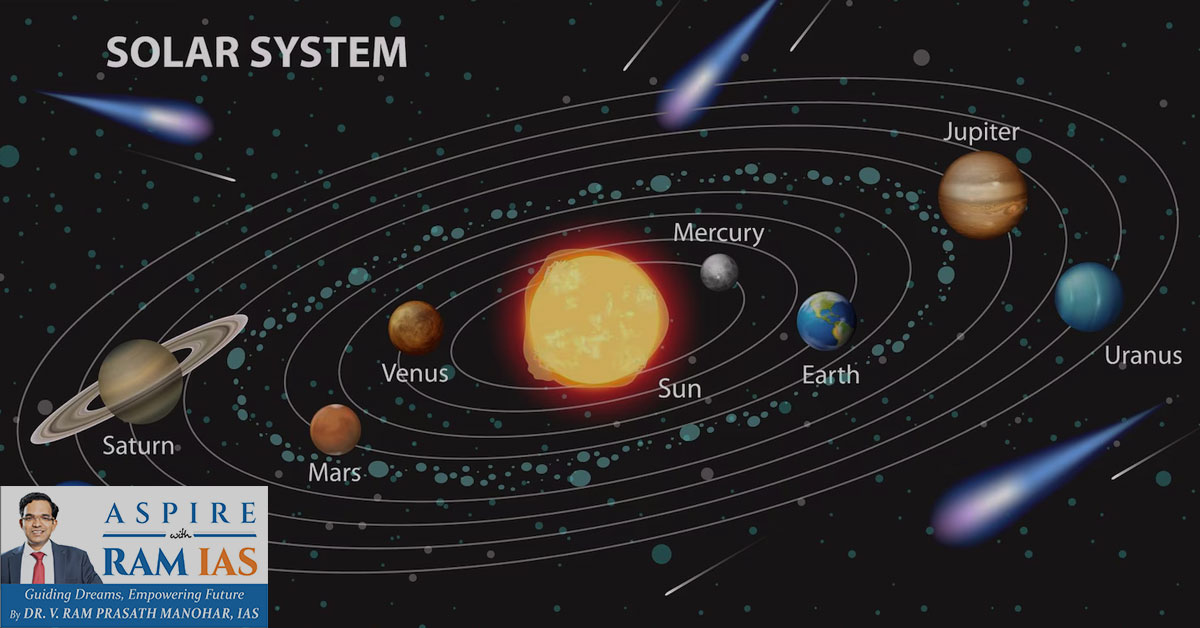
Solar System: Core Components
Sun: ~99.86% of the total mass of the solar system; source of energy via nuclear fusion.
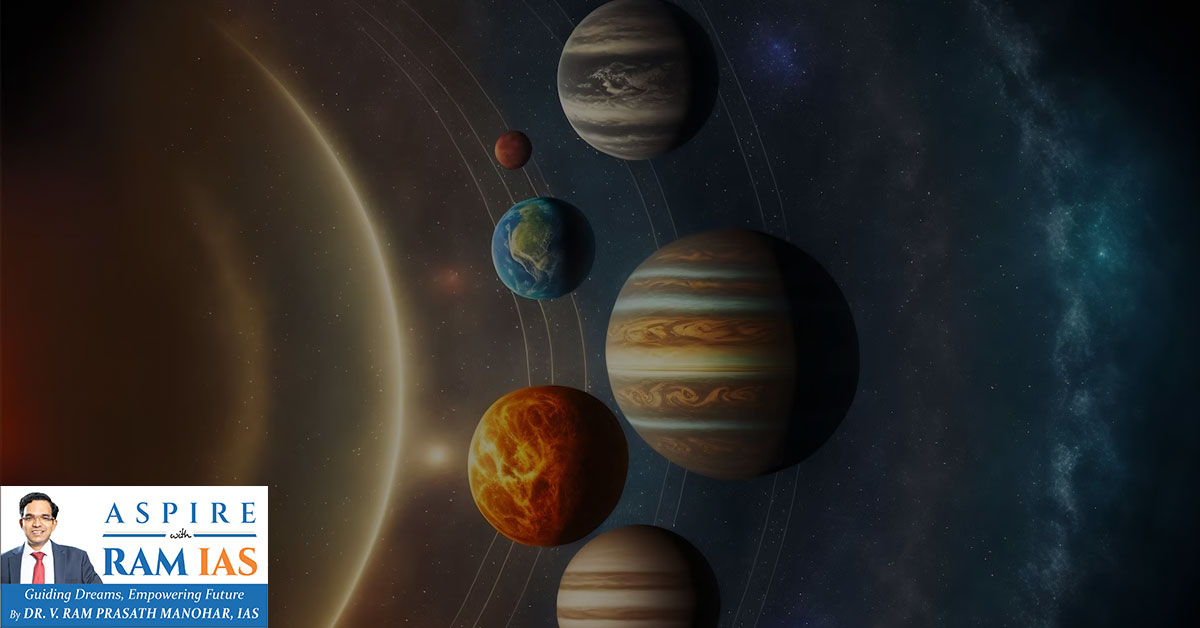
Nuclear Disc Model (Neo-Laplacian Model)
The solar system formed from a rotating interstellar nebula (gas + dust). Explains Sun and planets formation together, unlike earlier encounter theories.
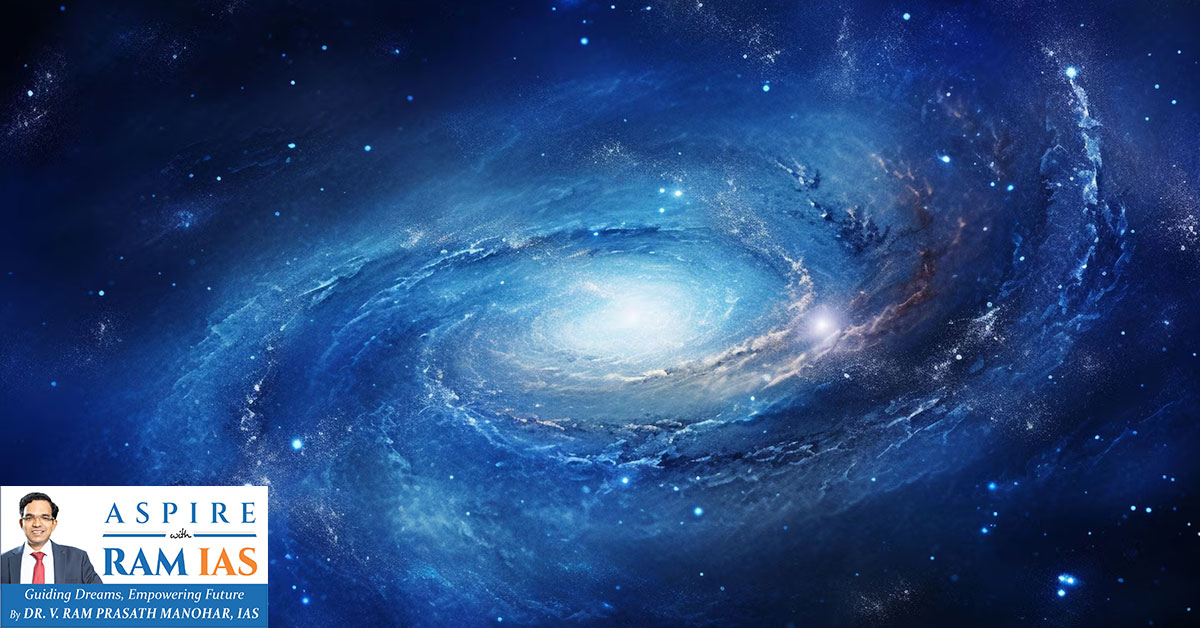
Galaxies: Spiral Galaxies, Elliptical Galaxies & Milky Way
A galaxy is a massive system of millions to billions of stars, along with gas and dust, held together by gravity. Galaxies are the basic building blocks of the universe.
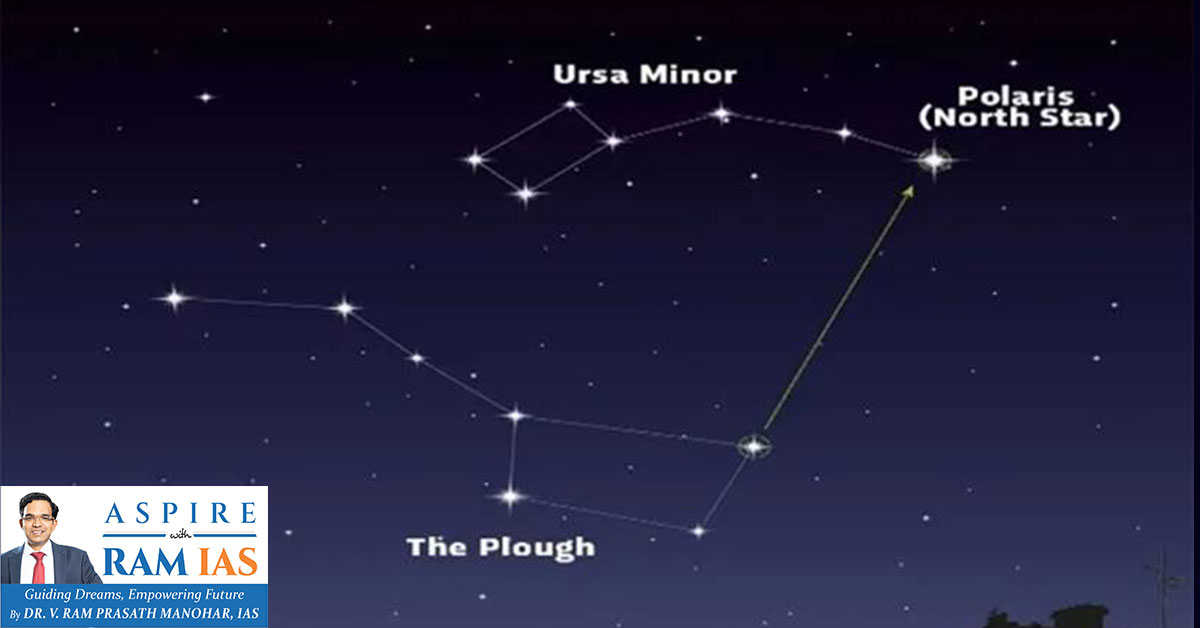
Star Formation / Stellar Evolution
Nebula – A vast cloud of hydrogen, helium, and dust. Birthplace of stars. Collapse begins due to gravitational instability (often triggered by shock waves from su-pernovae).
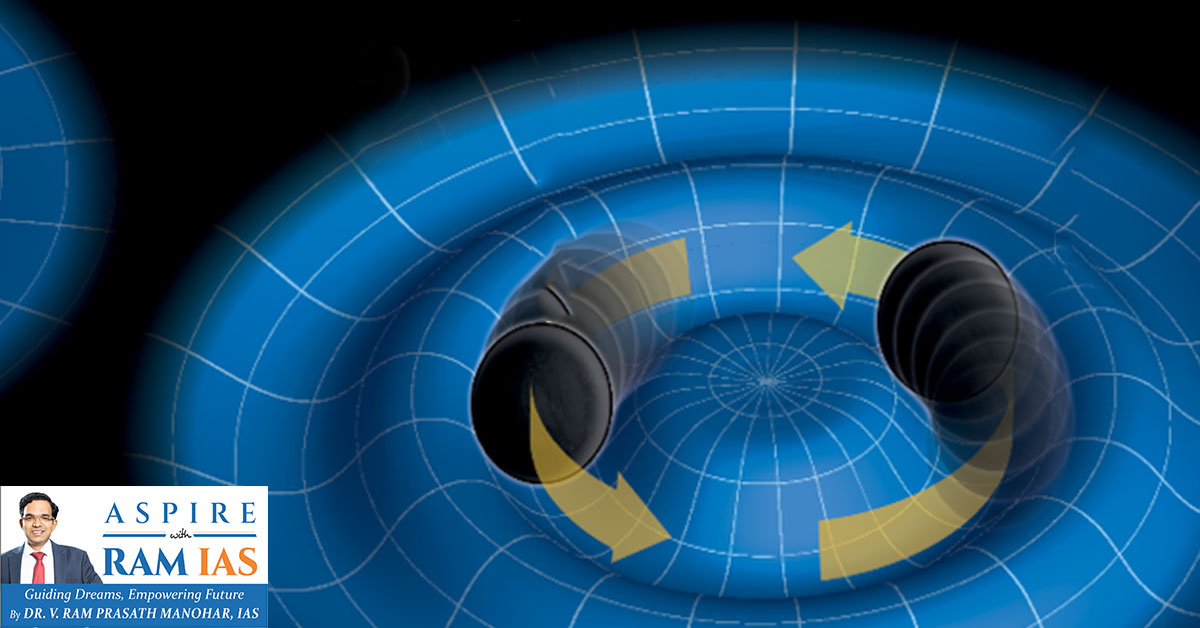
Gravitational Waves, Doppler Shift & Cosmic Microwave Background
Doppler Shift (Redshift & Blueshift): Redshift/Blueshift = change in light wavelength as celestial objects move away or towards us.
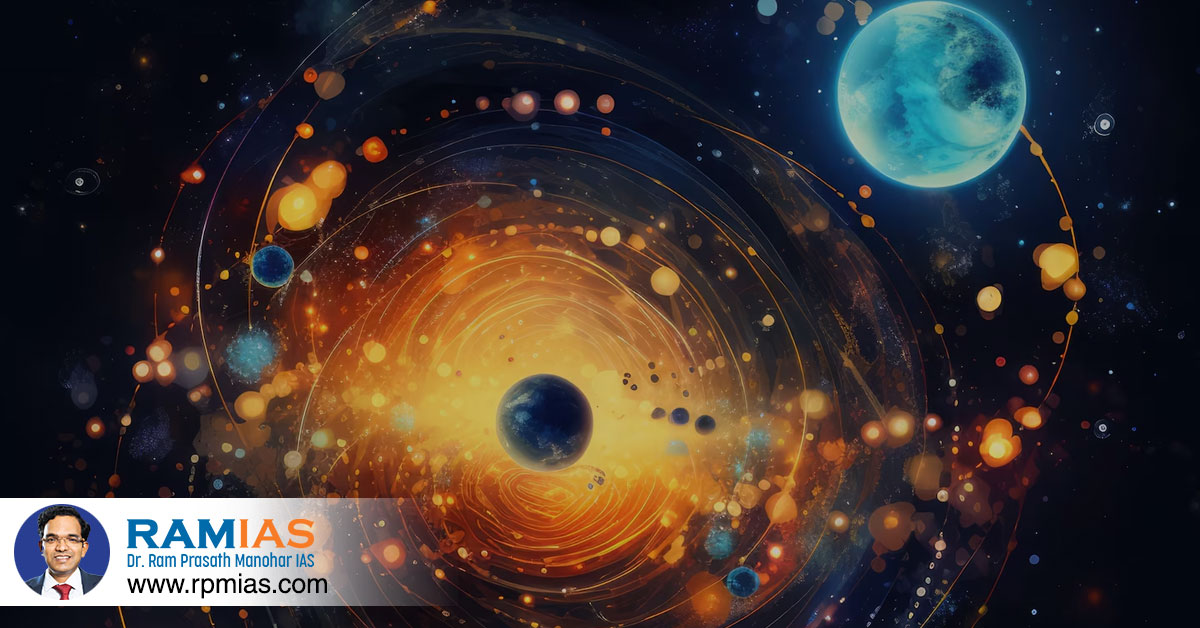
The Universe, Big Bang Theory & Evolution of the Universe
The Universe: Definition – The Universe = all existing matter + energy + space.
It includes: Physical components: subatomic particles → stars → galaxies → superclusters
