
Study Materials
General Studies - Polity
Leader of the Opposition (LoP) in India
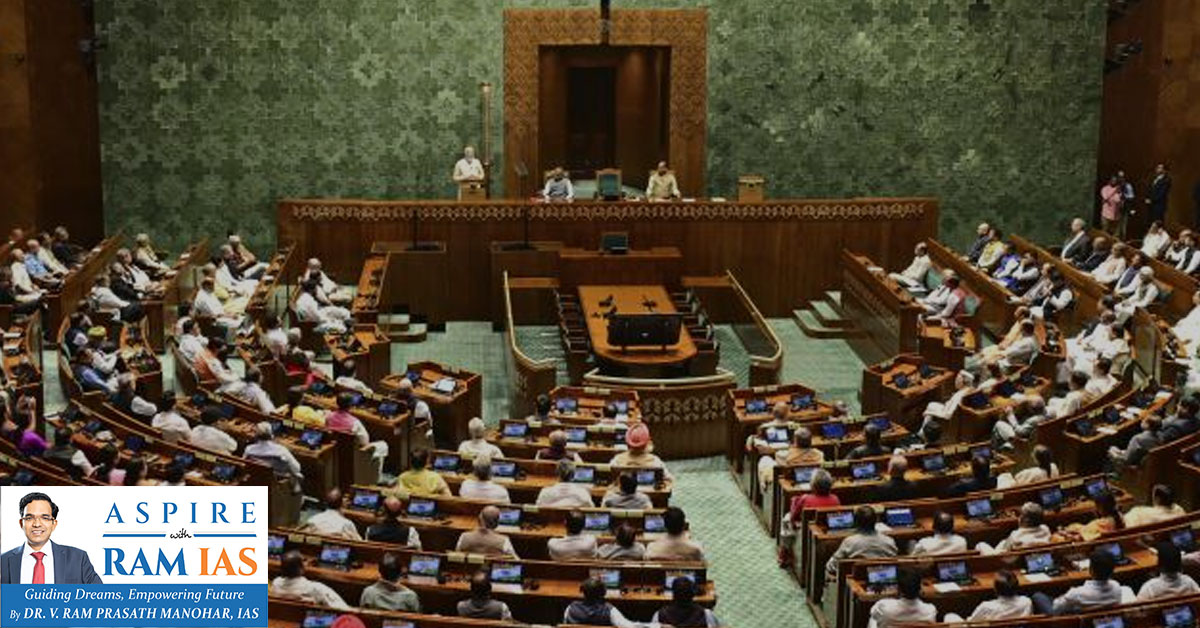
1. Meaning of Leader of Opposition
- The Leader of Opposition (LoP) is a Member of Parliament who leads the largest opposition party (not in government) in a House of Parliament.
- He/She represents the organized and official opposition to the ruling government.
- The LoP is responsible for:
- Criticising government policies
- Offering alternative policies
- Ensuring accountability and transparency
- Ivor Jennings called the LoP the “Alternative Prime Minister”.
2. Leader of the Opposition in the Indian Parliament
India has a Leader of the Opposition in each House:
- Lok Sabha
- Rajya Sabha
3. Leader of the Opposition in the Lok Sabha
- The LoP in Lok Sabha is:
- A member of the Lok Sabha
- Leader of the largest opposition party
- Recognised by the Speaker of the Lok Sabha
- Functions:
- Leads opposition during debates
- Questions government actions
- Presents alternative viewpoints on policies
4. Leader of the Opposition in the Rajya Sabha
- The LoP in the Rajya Sabha is:
- A member of the Rajya Sabha
- Leader of the largest opposition party
- Recognised by the Chairman of the Rajya Sabha (Vice-President of India)
- Functions are similar to Lok Sabha LoP.
5. Constitutional and Legal Status
- Not mentioned in the Constitution of India
- Given statutory status under:
- Salary and Allowances of Leaders of Opposition in Parliament Act, 1977
- Rank:
- Equivalent to a Cabinet Minister
- Entitled to a similar salary, allowances, and facilities
- First official recognition of LoP:
- 1969
6. Criteria for Recognition of Leader of Opposition
As per rules and conventions:
- The opposition party must have:
- At least 1/10th (10%) of the total membership of the House
- Recognition is done by:
- Speaker (Lok Sabha)
- Chairman (Rajya Sabha)
- If two opposition parties have equal strength:
- The Presiding Officer may recognise any one leader
- The decision of the Presiding Officer is:
- Final and binding
Prelims Fact: If no opposition party meets the 10% rule → No LoP is recognised.
7. Role of Leader of Opposition
The LoP performs several key democratic functions:
Parliamentary Role
- Provides constructive criticism of government policies
- Leads opposition during:
- Debates
- Discussions
- Question Hour
- Influences legislative agenda
Democratic Role
- Acts as a check on executive power
- Ensures checks and balances
- Protects minority and dissenting voices
Political Role
- Presents alternative policies
- Prepares opposition to act as an alternative government
- Acts as a bridge between the government and the opposition
8. Significance of the Leader of the Opposition
The LoP strengthens democracy in multiple ways:
- Checks and Balances: Prevents misuse of power
- Policy Alternatives: Improves the quality of decision-making
- Guardian of Minority Rights: Represents non-ruling voices
- Committee Role: Ensures balanced representation in parliamentary committees
- Healthy Debate: Promotes informed and robust discussions
- Democratic Stability: Enhances accountability and transparency
9. Leader of Opposition in Lok Sabha (Important Timeline)
Key Highlights (Prelims-Relevant):
- First LoP: Ram Subhag Singh (1969)
- Long vacant periods:
- 1970–1977
- 1979–1989
- 2014–2024
- Current LoP:
- Rahul Gandhi (2024–Present) – 18th Lok Sabha
10. Shadow Cabinet
- Exists in the British Parliamentary System
- Opposition forms a Shadow Cabinet:
- Each member “shadows” a minister
- Purpose:
- Prepare for future governance
- Act as an alternative government
- Reinforces why LoP is called:
- “Alternative Prime Minister”
11. Quick Pointers
- LoP is a statutory post, not constitutional
- Minimum strength required: 10% of the House
- Rank equivalent to: Cabinet Minister
- USA equivalent term: Minority Leader
- Recognised by:
- Speaker (Lok Sabha)
- Chairman (Rajya Sabha)
