
Study Materials
General Studies - Environment
Radioactive Pollution: Ionizing & Non-Ionizing Radiation
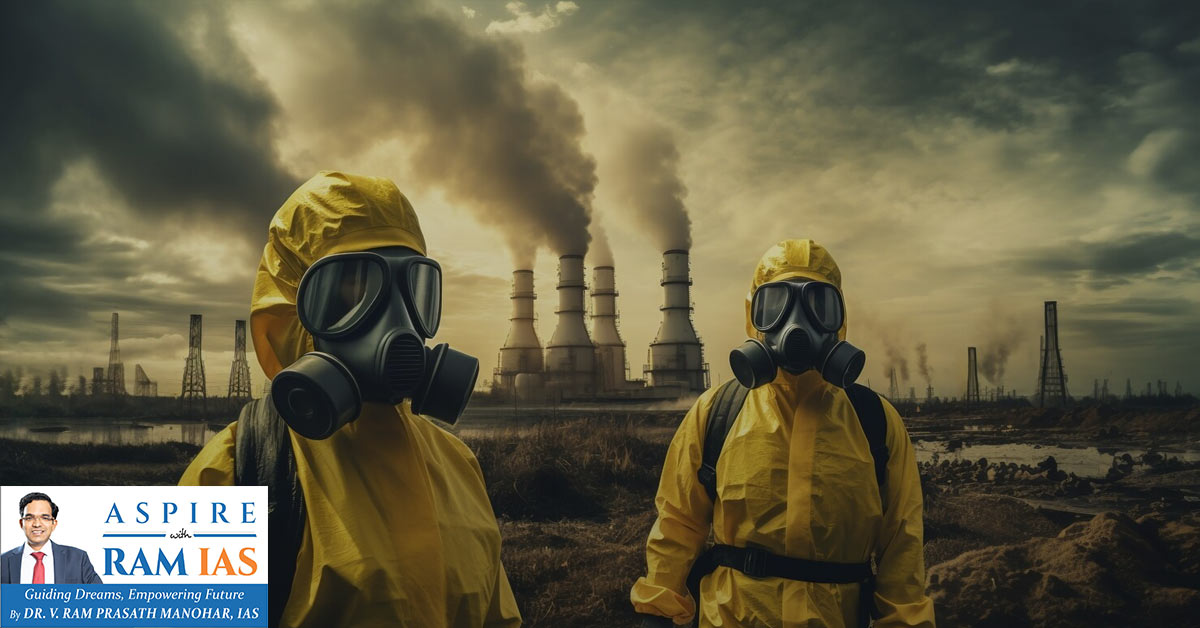
I. Radioactive Pollution – Meaning
- Increase in natural radiation levels posing threat to life
- Contamination by radioactive substances in solids, liquids, gases, or body tissues
- Defined by the International Atomic Energy Agency (IAEA)
Two Core Problems Of Nuclear Energy
- Accidental leakage
- Safe disposal of radioactive waste
II. Sources Of Radioactive Pollution
A. Artificial Sources
- Nuclear power plant accidents
- Nuclear weapons testing (fallout)
- Uranium and thorium mining
- Medical uses (X-rays, radiation therapy)
- Nuclear laboratories and reactors
Important radionuclides in fallout:
- Strontium-90
- Caesium-137
- Iodine-131
B. Natural Sources
- Cosmic rays
- Radionuclides in Earth’s crust:
– Uranium-238
– Thorium-232
– Radium-224
– Potassium-40
– Carbon-14
III. Radioactivity – Basic Concept
Spontaneous emission of:
- Alpha particles
- Beta particles
- Gamma rays
Due to the disintegration of unstable atomic nuclei.
IV. Ionizing Vs Non-Ionizing Radiation
A. Non-Ionizing Radiation
Definition
Electromagnetic waves with longer wavelengths.
Examples:
- Near infrared
- Radio waves
- Microwaves
- Higher wavelength ultraviolet
Characteristics
- Cannot ionize atoms
- Can excite atoms and molecules
- Low penetration power
Effects
- Sunburn
- Snow blindness
- Eye damage
- Thermal heating (microwave oven)
Mobile Tower Radiation
- Non-ionizing
- Causes thermal and non-thermal effects
- Possible impacts:
– Headache
– Fatigue
– Genetic and reproductive concerns
– Disturbance in birds’ navigation
B. Ionizing Radiation
Definition
Radiation that removes electrons from atoms → forms ions.
Types
Electromagnetic:
- Short wavelength ultraviolet
- X-rays
- Gamma rays
Particle radiation:
- Alpha particles
- Beta particles
- Neutrons
Characteristics
- High penetration power
- Break chemical bonds
- Damage macromolecules (DNA, proteins)
V. Biological Damage
A. Somatic Damage
Affects body cells (non-reproductive)
Examples:
- Radiation sickness
- Hair loss
- Lung fibrosis
- Cataract
- Cancer
B. Genetic Damage
Affects reproductive cells
- Mutations
- Abnormalities in the next generation
- Heritable defects
VI. Radiation Dose
Unit:
- Rem (radiation equivalent in man)
Low dose:
- Cells repair damage
High dose:
- Radiation sickness
- Permanent cell damage
- Cancer
VII. Damage Potential Of Particles
Alpha
- Blocked by paper
- Harmful if ingested/inhaled
Beta
- Penetrates skin
- Blocked by glass or thin metal
Gamma
- Highly penetrating
- Blocked only by thick concrete
VIII. Half-Life
- Time required for half of the radioactive atoms to decay
- Ranges from seconds to thousands of years
- Long half-life radionuclides → major environmental threat
IX. Nuclear Power Plant Accidents
Major global accidents:
- Three Mile Island (1979)
- Chernobyl (1986)
- Fukushima Daiichi (2011)
Causes:
- Reactor core overheating
- Fuel rod meltdown
- Release of radioactive materials
X. Safe Disposal Of Nuclear Waste
Types
Low-Level Waste
- Medical
- Research
- Protective clothing
High-Level Waste
- Spent fuel rods
- Nuclear weapons waste
Proposed Methods
- Deep geological burial
- Disposal in space
- Ocean dumping
- Burial under polar ice
- Conversion into harmless isotopes
Current practice:
- Storage ponds
- Reprocessing plants
XI. Important Points
- Non-ionizing radiation cannot remove electrons
- Ionizing radiation causes DNA breakage
- Gamma rays have the highest penetration
- Alpha most dangerous internally
- Mobile tower radiation is non-ionizing
- Long half-life radionuclides cause persistent pollution
