
Modern History
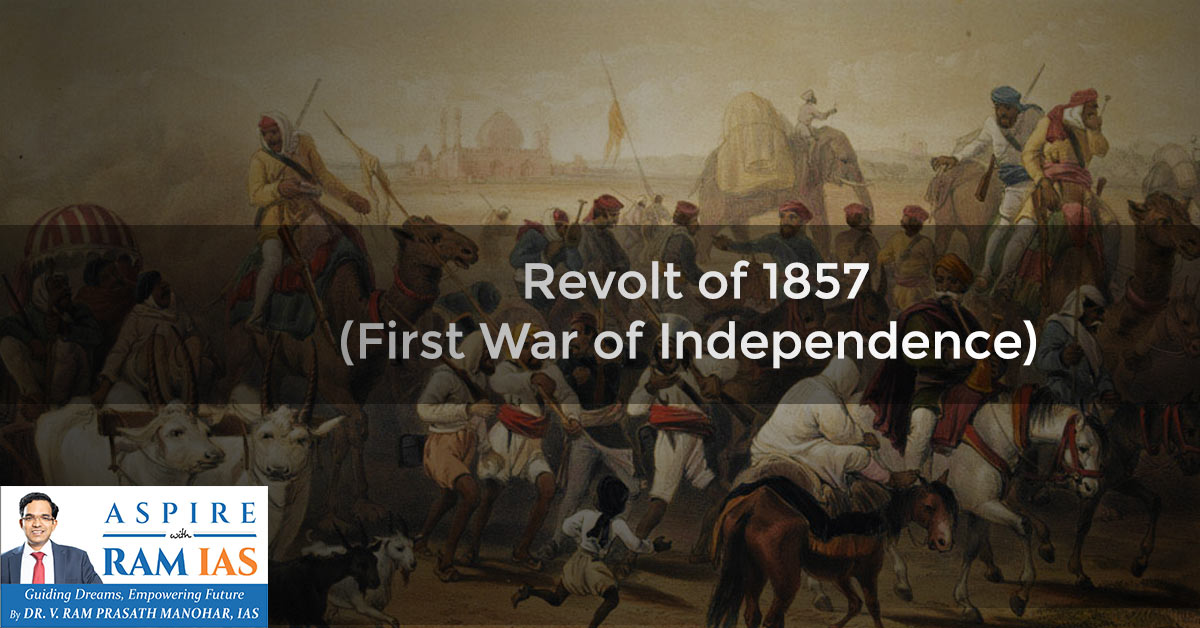
Revolt of 1857 (First War of Independence)
Introduction
The Revolt of 1857 was the first large-scale armed uprising against British rule in India.
- Began: 10 May 1857, Meerut
- Symbolic leader: Bahadur Shah Zafar
- Nature: Sepoy mutiny → Civil rebellion
It marked a watershed in British policy towards India.
Causes of the Revolt of 1857
A. Political Causes
Doctrine of Lapse
- Introduced by Lord Dalhousie
- Annexed states without a natural heir
- Affected: Satara, Jhansi, Nagpur
Annexation of Awadh (1856)
- On grounds of misgovernance
- Alienated taluqdars, sepoys & peasants
Humiliation of the Mughal Emperor
- Successors barred from Red Fort
- Title to be abolished
Exclusion of Indians from high posts
- Civil & military discrimination
B. Economic Causes
- Drain of Wealth
- Destruction of handicrafts
- Heavy land revenue (Permanent, Ryotwari, Mahalwari)
- Indigo & Opium exploitation
- Peasant indebtedness
- Zamindari displacement
C. Social & Religious Causes
- Racial arrogance
- Missionary activities
- Fear of forced conversion
- Abolition of Sati, Widow Remarriage Act seen as interference
- Loss of privileges of pandits & maulvis
D. Military Causes
- Low pay & poor treatment
- No promotions to higher ranks
- General Service Enlistment Act (1856)
- Discontent among the Bengal Army
E. Immediate Cause
- Introduction of the Enfield Rifle
- Cartridges allegedly greased with cow & pig fat
- Religious sentiments hurt
Timeline of Events
Date | Event |
29 Mar 1857 | Mangal Pandey incident (Barrackpore) |
9 May 1857 | 85 sepoys imprisoned (Meerut) |
10 May 1857 | Revolt begins at Meerut |
May 1857 | Delhi captured, Bahadur Shah declared Emperor |
June 1857 | Kanpur revolt under Nana Saheb |
June–July 1857 | Lucknow uprising |
Sept 1857 | British recapture Delhi |
1858 | Revolt suppressed |
Major Leaders & Centres
Delhi
- Bahadur Shah Zafar
- Bakht Khan
Jhansi
- Rani Lakshmibai
- Fought Hugh Rose
- Allied with Tatya Tope
Kanpur
- Nana Saheb
- Declared himself Peshwa
Lucknow
- Begum Hazrat Mahal
- Supported by Maulvi Ahmadullah
Bihar
- Kunwar Singh
Causes of Failure
- Lack of unified ideology
- No central leadership
- Limited geographical spread
- Punjab & South India stayed loyal
- Many princes supported the British
- Educated Indians did not support the revolt
- British military superiority
- Poor communication
Consequences of Revolt
A. Political
Government of India Act, 1858
- End of the East India Company rule
- Power transferred to the British Crown
- The Secretary of State for India was created
B. Policy Towards Princes
- The Doctrine of Lapse was abolished
- Adoption rights restored
C. Military Reorganisation
- Increase in European troops
- Divide regiments on caste & community lines
D. Divide and Rule Policy
- Deliberate Hindu–Muslim divisions
E. Psychological Impact
- End of Mughal rule
- Rise of organised nationalism
Features of the Revolt
- Mainly North & Central India
- Sepoy and Peasant participation
- Hindu-Muslim unity
- Anti-colonial in nature
- Lacked modern nationalist ideology
