1. Nebula
- A vast cloud of hydrogen, helium, and dust.
- Birthplace of stars.
- Collapse begins due to gravitational instability (often triggered by shock waves from supernovae).
2. Protostar
- Early stage of star formation.
- Nuclear fusion has NOT started.
- Emits energy due to gravitational contraction, not fusion.
- Surrounded by dust → visible mainly in infrared, not optical light.
3. T Tauri Star
- An intermediate stage between a protostar and main sequence star.
- Still contracting under gravity.
- Commonly asked in UPSC as a young stellar object.
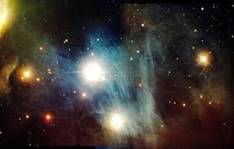
4. Main Sequence Star
- Hydrogen → Helium fusion occurs in the core.
- Produces stable energy due to a balance between:
- Outward radiation pressure
- Inward gravitational force
- About 90% of all stars, including the Sun, are main-sequence stars.
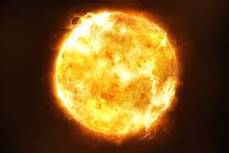
5. Red Dwarf
- Smallest and faintest main-sequence stars.
- Low luminosity, surface temperature ~ 4000°C.
- Make up ~75% of Milky Way stars.
- Example: Proxima Centauri (nearest star to the Sun).
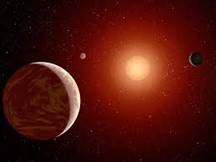
6. Red Giant / Red Supergiant
- Occurs when core hydrogen is exhausted.
- Hydrogen fusion continues in a shell around the core.
- Red Giant → Low/medium mass stars
- Red Supergiant → Massive stars
- Helium fusion produces carbon and heavier elements.
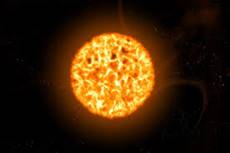
7. Degenerate Matter
- Forms when fusion slows, and gravity dominates.
- Electrons are forced closer to nuclei.
- Found in white dwarfs and neutron stars.
- Allows extreme densities.
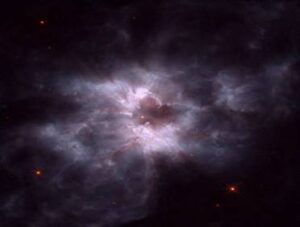
8. Planetary Nebula
- Outer layers ejected by a dying low-mass star.
- No planets involved (name is misleading).
- Short-lived (tens of thousands of years).
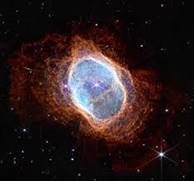
9. White Dwarf
- Final stage of stars like the Sun.
- Made of degenerate matter.
- Extremely dense: one spoonful weighs several tonnes.
- No fusion; shines due to residual heat.
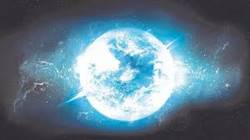
10. Nova
- Occurs in a binary system.
- A white dwarf pulls hydrogen from a companion star.
- Causes a surface nuclear explosion, but the star survives.
- Recurrent phenomenon.
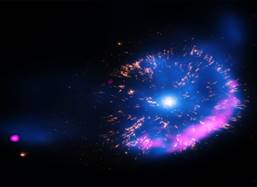
11. Black Dwarf
- A fully cooled white dwarf.
- Theoretical only — none exist yet.
- Cooling time > age of the universe (13.8 billion years).

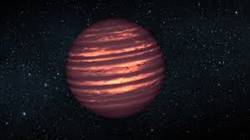
12. Brown Dwarf
- Between planet and star.
- Insufficient mass for hydrogen fusion.
- Often called “failed stars”.
SUPERNOVA
Definition
- Explosive death of a star.
- Can shine as brightly as 100 million suns.
- A major source of cosmic rays.
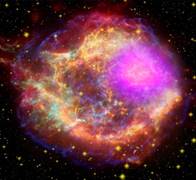
Types of Supernovae
Type Ia Supernova
- Occurs in binary systems.
- White dwarf accretes mass → runaway carbon fusion.
- Completely destroys the star.
- Used as standard candles to measure the expansion of the universe.
Type II Supernova
- Core collapse of a massive star (iron core).
- Leaves behind a neutron star or black hole.
Importance of Supernovae
- Create elements heavier than iron (gold, uranium).
- Spread elements into space → stellar recycling.
- Trigger formation of new stars.
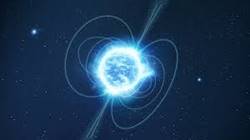
NEUTRON STAR
- Formed after a Type II supernova.
- Protons + electrons → neutrons.
- Extremely dense: 3 solar masses in ~20 km.
- Beyond a limit → collapses into a black hole.
Chandrasekhar Limit
- The maximum mass for a white dwarf ≈ 4 solar masses.
- Beyond this → neutron star or black hole.
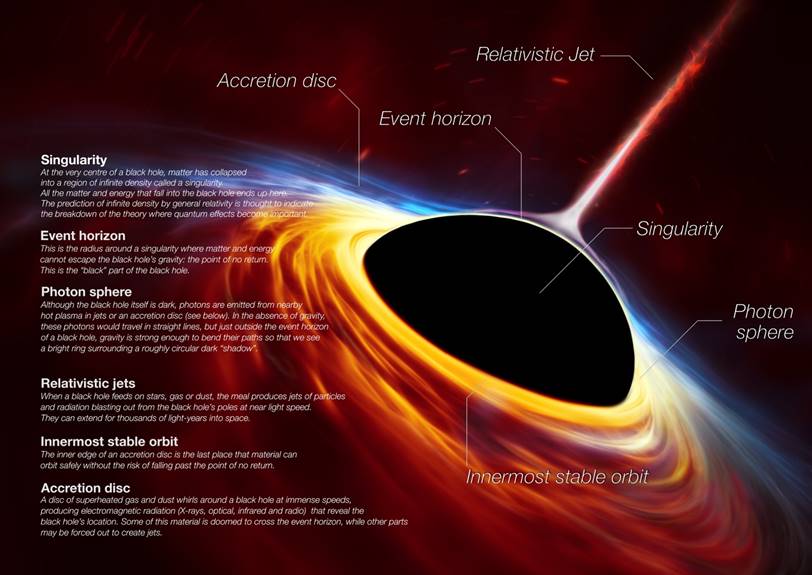
BLACK HOLES
- End stage of very massive stars.
- Gravity is so strong that not even light escapes.
- Density → effectively infinite.
- Distorts spacetime and can absorb nearby matter.
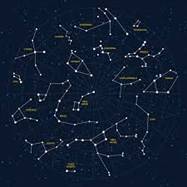
CONSTELLATIONS
- A group of stars forming a recognisable pattern.
- Examples:
- Ursa Major (Saptarshi / Great Bear)
- Orion
- Cassiopeia
- Leo Major
Key Facts
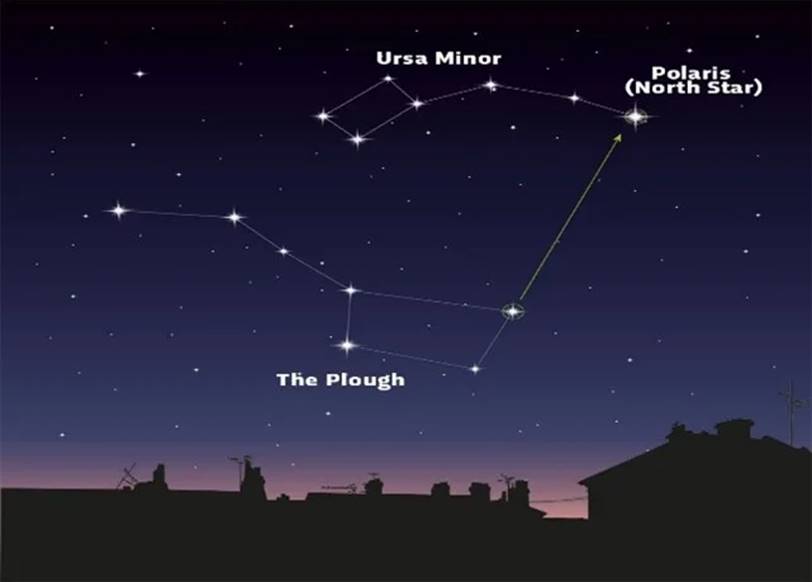
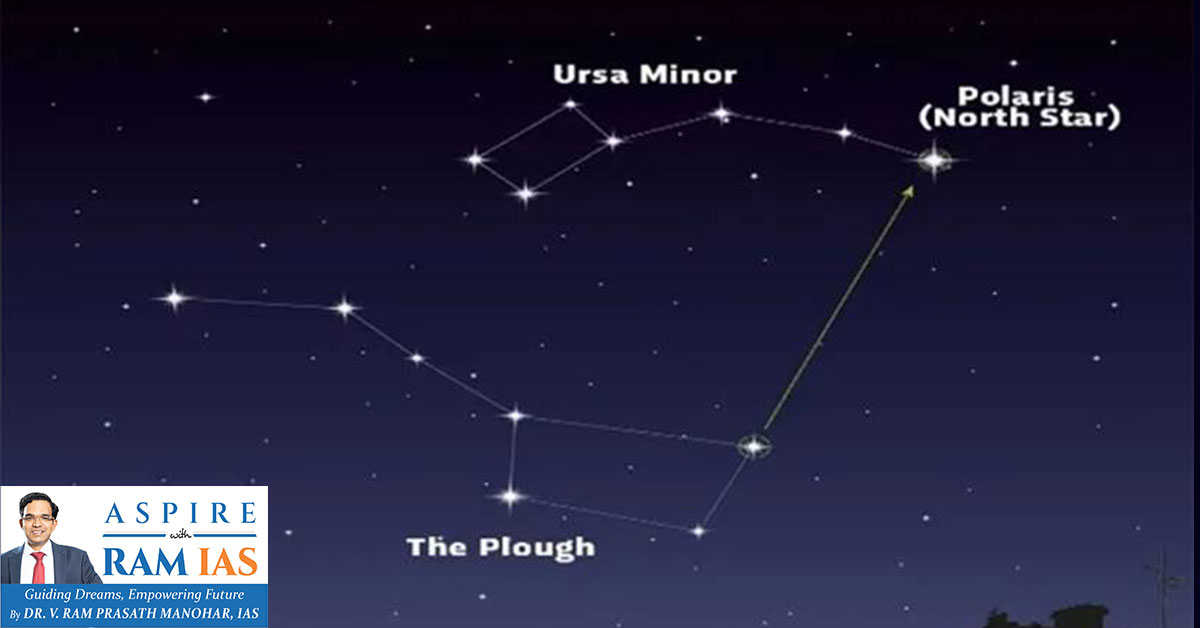
- Stars appear to revolve around the Pole Star.
- Some northern constellations are not visible from the southern hemisphere.
- Orion is visible in winter evenings.
- Sirius (the brightest star) lies near Orion.
POLE STAR (POLARIS)
- Lies along Earth’s rotational axis.
- Appears stationary in the sky.
- Visible only from the Northern Hemisphere.
- Actually, a triple star system.