
Study Materials
General Studies - Polity
Structure of the Indian Parliament
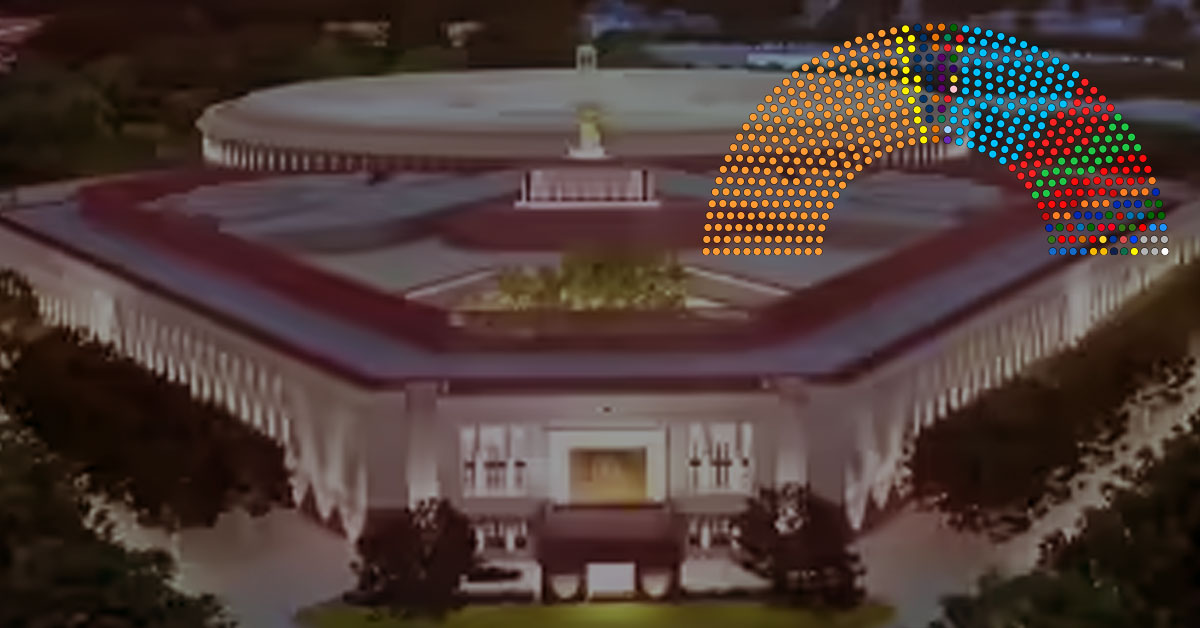
Constitutional Basis
- Article 79: Parliament consists of President + Lok Sabha + Rajya Sabha
- Articles 79–122 (Part V) deal with Parliament’s composition, powers & procedures
Why President is part of Parliament
- Mandatory assent for bills to become law
- Power to summon, prorogue & dissolve Lok Sabha
- Addresses Parliament at the first session each year & after general elections
- Can promulgate Ordinances (Article 123)
Bicameral Legislature
- India follows bicameralism to represent the population + states
- Houses:
- Lok Sabha (House of the People)
- Rajya Sabha (Council of States)
Lok Sabha (House of the People)
- Article 81
- Max strength: 550 (530 States + 20 UTs)
- Directly elected
- Term: 5 years (Article 83)
- Can be dissolved
- Minimum age: 25 years
- Presiding Officer: Speaker
- 104th CAA: Removed Anglo-Indian nomination
Rajya Sabha (Council of States)
- Max strength: 250
- 238 elected (States + UTs)
- 12 nominated by the President (Art, Science, Literature, Social Service)
- Permanent House
- 1/3 members retire every 2 years
- Term: 6 years (RPA, 1951)
- Minimum age: 30 years
- Presiding Officer: Vice-President (ex officio Chairman)
Qualifications (Article 84)
- Citizen of India
- Prescribed age
- Registered voter
- SC/ST status required for reserved seats
Disqualifications
Article 102 + RPA 1951
- Office of profit
- Unsound mind / Insolvency
- Loss of Indian citizenship
- Conviction (≥2 years imprisonment)
- Corrupt practices, election offences
Defection (10th Schedule)
- Voluntarily giving up party membership
- Voting against the party whip
Decision on Disqualification
- Article 103: The President decides
- Decision based on the Election Commission’s opinion
Presiding Officers
- Lok Sabha: Speaker & Deputy Speaker (Art. 93)
- Rajya Sabha: Chairman (VP) & Deputy Chairman (Art. 89)
- Panel of Chairpersons in both Houses for presiding duties
Vacation of Seat
- Dual membership
- Disqualification/resignation
- Absence for 60 days without permission
- Election declared void
- Appointment as President or Governor
Facts
- Rajya Sabha cannot be dissolved
- Speaker continues even after Lok Sabha dissolution
- Ordinance power = President, not Parliament
- Anti-defection decision: Speaker / Chairman
MCQs
Q1. Which of the following correctly describes the composition of the Parliament of India?
A. President, Lok Sabha, and Supreme Court
B. President, Rajya Sabha and Lok Sabha
C. Lok Sabha, Rajya Sabha, and Council of Ministers
D. President, Council of Ministers, and Lok Sabha
Answer: B
Q2. Why is the President considered an integral part of the Indian Parliament?
A. The President is a member of the Rajya Sabha
B. The President presides over joint sittings
C. A bill cannot become law without the President’s assent
D. President introduces Money Bills
Answer: C
Q3. With reference to the Rajya Sabha, consider the following statements:
- It is a permanent body.
- One-third of its members retire every two years.
- It can be dissolved by the President.
Which of the statements given above are correct?
A. 1 and 2 only
B. 2 and 3 only
C. 1 and 3 only
D. 1, 2, and 3
Answer: A
Q4. The minimum age prescribed by the Constitution for membership of the Lok Sabha and Rajya Sabha, respectively, is:
A. 25 years and 30 years
B. 30 years and 25 years
C. 21 years and 30 years
D. 25 years and 35 years
Answer: A
Q5. Under Article 103 of the Constitution, questions regarding the disqualification of a Member of Parliament are decided by:
A. Election Commission
B. Supreme Court
C. The President based on the Election Commission’s opinion
D. Speaker of Lok Sabha
Answer: C
