
Study Materials
General Studies - Polity
Vice President of India
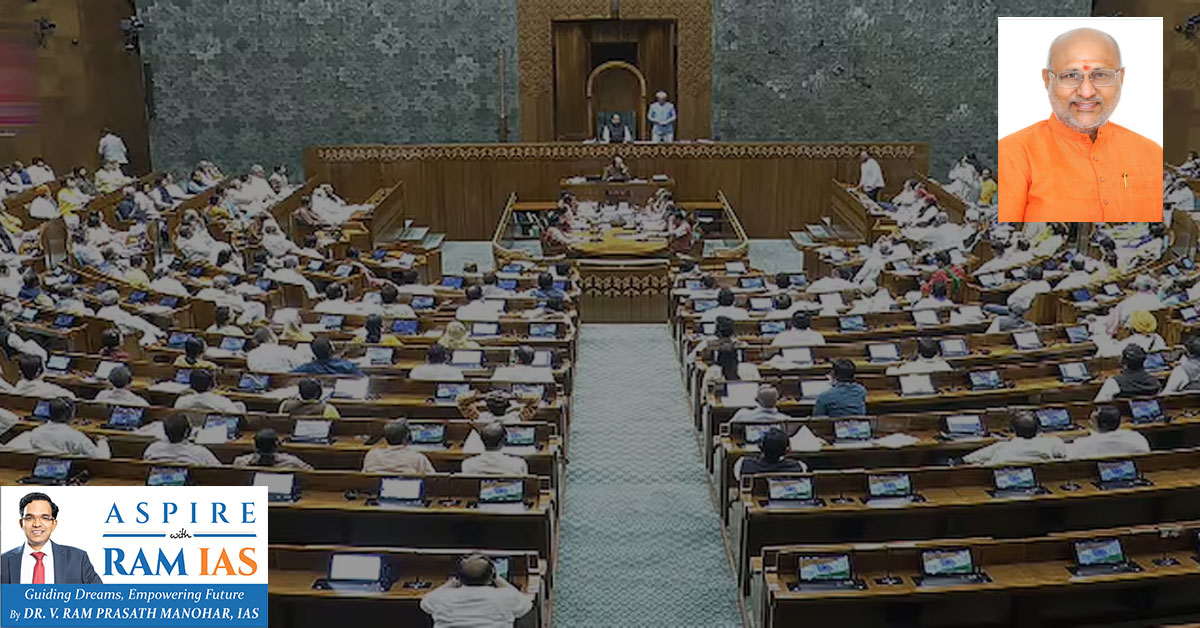
Constitutional Position
- 2nd-highest constitutional office after the President (Order of Precedence).
- Ex-officio Chairman of Rajya Sabha (Articles 64 & 89).
- Article 63: “There shall be a Vice President of India.”
- First in line of succession to the President.
Election Process (Article 66)
- Indirect election by an Electoral College of both Houses of Parliament.
- Includes elected and nominated MPs of Lok Sabha & Rajya Sabha.
- State legislatures are NOT involved (unlike Presidential elections).
- System:
- Proportional representation,
- Single Transferable Vote (STV),
- Secret ballot.
- Conducted by the Election Commission under the Presidential and Vice-Presidential Elections Act, 1952.
- Disputes: SC has exclusive jurisdiction (Article 71).
Eligibility
(As per Articles 66(4), 84, and 102)
- Must be an Indian citizen.
- ≥ 35 years of age.
- Eligible for Rajya Sabha membership.
- Must not hold an office of profit.
Term & Oath
- Term: 5 years (Article 67).
- Oath/Affirmation: Article 69, administered by the President.
- Outgoing VP continues until successor takes charge (Article 67(c)).
- May resign by submitting a resignation to the President.
Powers & Functions
1. As Rajya Sabha Chairman
- Presides over RS; maintains order.
- Casting a vote in case of a tie.
- Does NOT vote otherwise (same as Speaker).
2. When Acting as President (Article 65)
- VP acts as President during:
- Vacancy (death, resignation, removal).
- The President’s absence/illness.
- Must hold office until the new President is elected within 6 months.
- During this period, VP does not perform the RS Chairman functions.
Removal Procedure (Article 67(b))
- No impeachment (unlike the President).
- Only the Rajya Sabha can initiate removal.
- Requires:
- 14-day prior notice stating intent + reasons.
- Effective majority of RS
- (Majority of total membership, not just those present & voting).
- Simple majority of the Lok Sabha for approval.
- No specific grounds written in the Constitution — left to Parliament’s discretion.
- Lok Sabha does NOT vote on the resolution itself, only agrees post-RS passage.
