
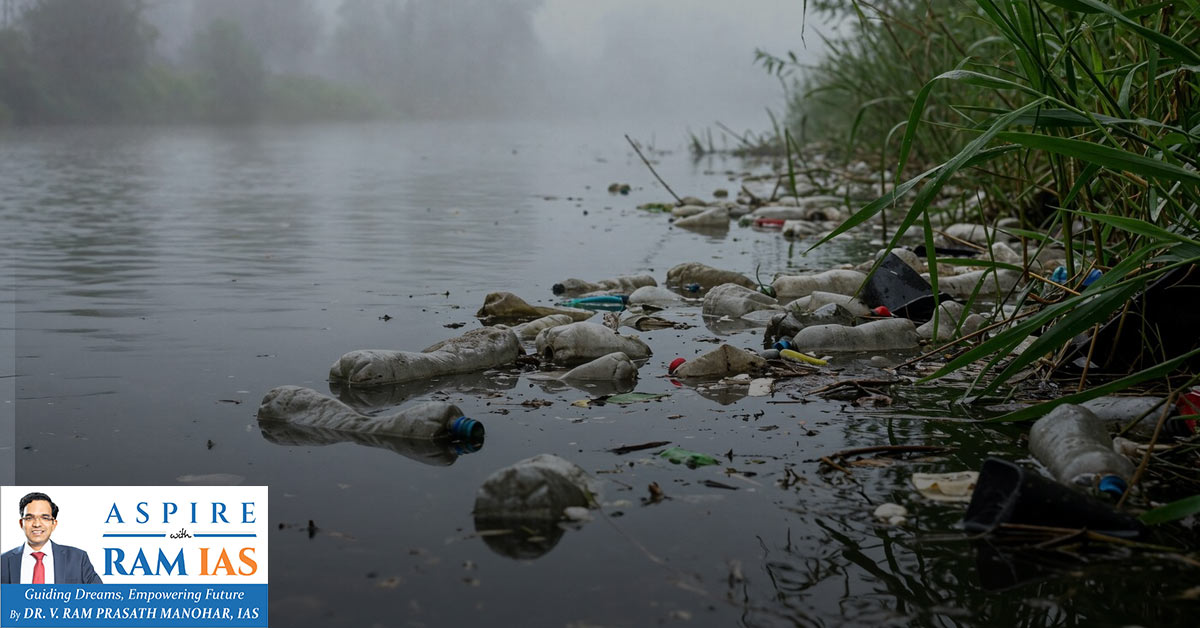
Definition
Water pollution is the addition/presence of undesirable substances (organic, inorganic, biological, radiological, or heat) in water, degrading its quality and making it unfit for use.
Sources of Water Pollution
1. Natural Sources
- Soil erosion
- Leaching of minerals from rocks
- Decay of organic matter
- Acid rain increasing solubility of toxic elements
2. Point and Non-Point Sources
- Point Source: Pollutants discharged from a specific location (e.g., drain pipes carrying industrial effluents).
- Non-Point Source: Diffuse sources like agricultural runoff, grazing lands, construction sites, abandoned mines.
Major Causes of Water Pollution
Sewage Water
- Domestic & hospital waste contain pathogens.
- Contains excreta, detergents, food waste, and cleaning agents.
- Causes diseases: Cholera, Typhoid, Dysentery.
Dissolved Oxygen (DO)
- Essential for aquatic life.
- DO < 8 mg/L → contaminated
- DO < 4 mg/L → highly polluted
- Decreases due to decomposition of organic waste.
Factors affecting DO:
- Surface turbulence
- Photosynthesis
- Decomposition
- Respiration by organisms
Biological Oxygen Demand (BOD)
- Measures the oxygen required by bacteria to decompose organic waste.
- Expressed in mg/L.
- High BOD → Low DO → High pollution.
- Limited to biodegradable matter only.
Chemical Oxygen Demand (COD)
- Measures the oxygen required to oxidise both biodegradable and non-biodegradable substances.
- Better indicator than BOD for total pollution load.
Industrial Wastes
- Petroleum, paper, chemical, and metal industries discharge heavy metals.
- Heavy metals: Mercury, Cadmium, Lead, Arsenic, Copper (>5 g/cm³ density).
- Toxic and carcinogenic.
Agricultural Pollution
- Fertilizers (N, P, K) → Eutrophication
- Pesticides (DDT, Endosulfan, Organophosphates)
- Runoff from poultry farms and slaughterhouses
- Many pesticides are non-biodegradable → Biomagnification
Thermal Pollution
- Discharge of hot water from power plants.
- Raises the temperature by 10–15°C.
- Reduces DO levels.
- Sudden temperature rise kills aquatic organisms.
Radiation Pollution
Example: Fukushima Daiichi nuclear disaster
- Causes a DNA mutation.
- Radioactive iodine → Thyroid cancer.
Marine Pollution
Oceans act as ultimate sinks for pollutants.
Causes
- Oil spills
- Sewage dumping
- Offshore drilling
- Navigational discharge
Oil Spills
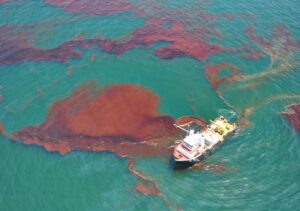
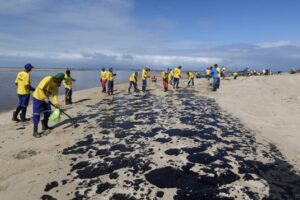
Effects
- Oil forms a thin layer blocking oxygen exchange.
- Fish & plankton die due to suffocation.
- Birds & mammals die due to poisoning.
Invasive Species
Water Hyacinth – “Terror of Bengal”
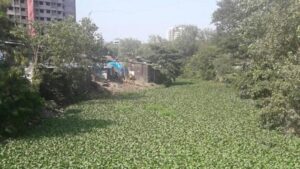
- Grows in eutrophic waters.
- Causes stagnation & ecological imbalance.
Groundwater Pollution
Common Pollutants
- Nitrates
- Fluoride
- Arsenic
- Uranium
- Heavy metals
Nitrates
- Cause Methemoglobinemia (Blue Baby Syndrome).
- React with haemoglobin forming non-functional methaemoglobin.
- Accelerates eutrophication.
Arsenic
- Major issue in the Ganga Delta (India & Bangladesh).
- Causes Black Foot Disease.
- Leads to lung & skin cancer.
Fluoride
- Causes Fluorosis.
- Skeletal deformities, knock-knee syndrome.
Effects of Water Pollution
On Human Health
- Mercury → Minamata disease
- Lead → Anaemia, neurological damage
- Cadmium → Itai-itai disease
- Arsenic → Skin cancer
On Environment
- Oxygen depletion kills fish.
- Biomagnification (DDT, Mercury).
- Eggshell thinning in birds due to DDT.
Eutrophication
Types
- Natural eutrophication
- Cultural eutrophication (human-induced)
Lake Classification
- Oligotrophic – Low nutrients
- Mesotrophic – Moderate
- Eutrophic – High nutrients
Mechanism of Algal Bloom
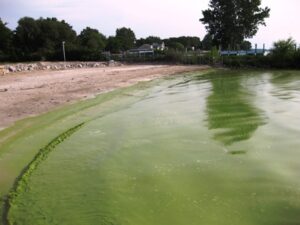
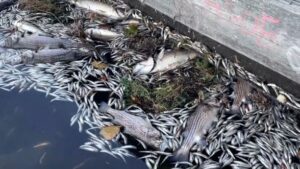
- Excess nitrates & phosphates → Rapid algal growth.
- Night respiration depletes oxygen.
- Fish die due to hypoxia.
- Anaerobic bacteria (e.g., Clostridium) release toxins.
Dead Zones
- Hypoxic marine regions.
- Caused by nutrient runoff.
- Example: Gulf of Mexico.
Mitigation Measures
- Wastewater treatment plants
- Riparian buffers (Wetlands, estuaries)
- Organic farming
- Nitrogen testing
- Reduce vehicular nitrogen emissions
- Cooling ponds for thermal discharge
International Conventions
London Convention (1972)
- Control the dumping of wastes at sea.
- The 1993 amendment banned radioactive waste dumping.
1996 Protocol
- Replaced the 1972 Convention.
- “Polluter Pays Principle”
- Prohibits incineration at sea.
United Nations Convention on the Law of the Sea (UNCLOS)
- Protects the marine environment.
- Establishes the International Seabed Authority.
- Holds states liable for marine pollution.
